Beyond the Bath Salts: The New Wave of Women-Only Retreats Redefining What Rest Looks Like
The word retreat has, for too long, been doing too little work. Somewhere between the advent of the destination spa and the proliferation of the Instagram-friendly wellness weekend, it came to signify something passive: being soothed, being wrapped in linen, being served herbal infusions in rooms decorated with pebbles. There is nothing inherently wrong with any of this. But for a growing number of British women, it is not remotely enough.
What they are seeking — and increasingly finding — is something altogether more demanding. Retreats that leave you not merely relaxed but genuinely altered. Experiences that build skills, forge connections, and return you to your ordinary life with something new in your hands and your head. The women-only format, it turns out, is the ideal crucible for exactly this kind of transformation.
Why Women-Only, and Why Now?
The question of single-sex spaces in travel is occasionally contentious, but the women running and attending this new generation of retreats are largely uninterested in the debate. The results, they say, speak clearly enough.
Sarah Hendricks, a 38-year-old architect from Bristol who attended a women-only sailing school on Croatia's Dalmatian coast last summer, describes the dynamic with precision. "On a mixed course, there's always a moment — maybe you don't notice it consciously — where you defer. Where you assume the person who speaks most confidently knows most. In an all-women environment, that dynamic simply doesn't exist. You have to work it out yourself. And you do."
This theme recurs with striking consistency across the retreat formats that are gaining traction among UK women. The absence of a particular social dynamic — the one that so often positions women as learners and men as authorities, however subtly — creates conditions in which skill acquisition accelerates and confidence compounds. The retreat becomes not just an experience but a proof of capability.
For retreat founders, this is both the point and the product.
Sailing Schools, Croatia: Competence as the Destination
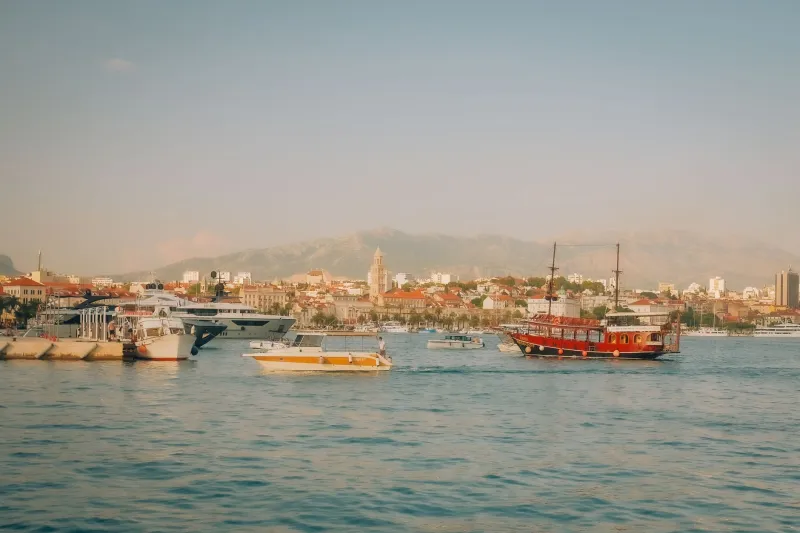
The Adriatic has long attracted British sailors, but the emergence of women-specific sailing courses along the Croatian coast represents something newer. Operators such as Womanship-inspired schools and UK-founded ventures now offer week-long liveaboard programmes in which small groups of women — beginners and improvers alike — take full responsibility for crewing a yacht under qualified female instruction.
The format is deliberately immersive. Days begin early with navigation briefings; afternoons are spent at the helm, managing sails, reading weather. Evenings, moored in harbours from Šibenik to Hvar, unfold over shared meals that tend, participants report, to become unexpectedly profound conversations.
"I came home having learned to sail," says Hendricks. "But I also came home having had a conversation about ambition and fear with a woman I'd known for six days that I've never managed to have with friends I've known for twenty years. The environment creates a different kind of honesty."
Bookable from the UK, these programmes typically run between May and September, with prices ranging from approximately £1,800 to £2,800 for a seven-night liveaboard experience including instruction, accommodation, and most meals.
Ceramics Immersions, Rural Japan: The Discipline of the Handmade
Japan has long understood the meditative quality of craft, and a number of specialist operators now offer women-focused ceramics retreats in the country's rural pottery regions — among them Mashiko in Tochigi Prefecture and the ancient kiln towns of Kyushu.
These are not taster sessions. Week-long and fortnight-long programmes place participants under the instruction of practising Japanese ceramicists, working daily in traditional studios and engaging with the philosophical dimensions of mingei — the folk craft tradition that treats functional objects as legitimate art forms.
For Emma Cartwright, a 45-year-old secondary school teacher from Edinburgh who attended a ten-day programme in Mashiko, the appeal was precisely the seriousness of the commitment. "I wanted to learn something properly. Not to make a pot I'd put on a shelf and forget about, but to understand a craft well enough to continue it at home. The women-only element meant we were all there for the same reason. There was no performance. We were just working."
The retreats typically include accommodation in a traditional machiya townhouse, daily studio sessions, and cultural excursions. Expect to budget between £3,500 and £5,500 for a ten-day programme, excluding flights from the UK.
Wilderness Navigation, Scottish Highlands: Reclaiming Outdoor Authority
Closer to home, and increasingly popular with women from across Britain, wilderness navigation and mountain skills courses in the Scottish Highlands occupy a category of their own. Operators including those operating within the Cairngorms National Park and across Wester Ross now offer women-only programmes ranging from weekend introductions to week-long expeditions.
The curriculum typically covers map and compass navigation, weather reading, wild camping, and basic wilderness first aid. The setting — some of the most demanding and rewarding terrain in Europe — provides both the challenge and the context.
"There's something very specific about being in a landscape that genuinely does not care about you," says Fiona MacAllister, who runs a women's navigation programme from her base in Inverness. "The mountain doesn't make concessions. And when you realise you've navigated across a plateau in poor visibility and arrived exactly where you intended to be, the satisfaction is absolute. It doesn't leave you."
Weekend courses begin at around £350 including instruction and shared accommodation. Week-long expeditions with wild camping typically run to £950–£1,400.
A Curated Guide to Bookable Experiences
For UK women considering their first step into this landscape, the following options represent some of the most reputable and compelling currently available:
Sailing, Croatia: Women's Sailing Adventures and several UK-based RYA-affiliated operators offer Dalmatian coast liveaboard courses. Search for women-specific RYA Competent Crew and Day Skipper courses departing from Split or Dubrovnik.
Ceramics, Japan: Wabi-Sabi Journeys and Ceramic Journeys Japan both offer women-inclusive (and occasionally women-only) programmes in Mashiko and Arita. Confirm single-sex cohorts at the time of booking.
Navigation, Scotland: Wilderness Scotland and Vertical Descents offer women-specific outdoor skills weeks. The John Muir Trust also periodically runs women-led wild skills programmes in partnership with qualified mountain leaders.
Writing and Landscape, Ireland: A newer addition to the genre, several retreats on the west coast of Ireland — particularly in County Clare and Connemara — now combine landscape walking with facilitated creative writing workshops in women-only formats. Prices from £650 for a long weekend.
The Return
What distinguishes this new generation of women's retreats from their predecessors is not the absence of rest — most participants describe a profound quality of rest, precisely because it is earned — but the nature of what is carried home. Not a scented candle. Not a crystal. A skill, a certificate, a friendship forged in the particular crucible of shared difficulty, and the quiet, durable knowledge that you are more capable than you arrived believing.
That, it turns out, is what transformation looks like when it is taken seriously.