Surrender the Schedule: On the Radical Freedom of Wandering Without a Plan
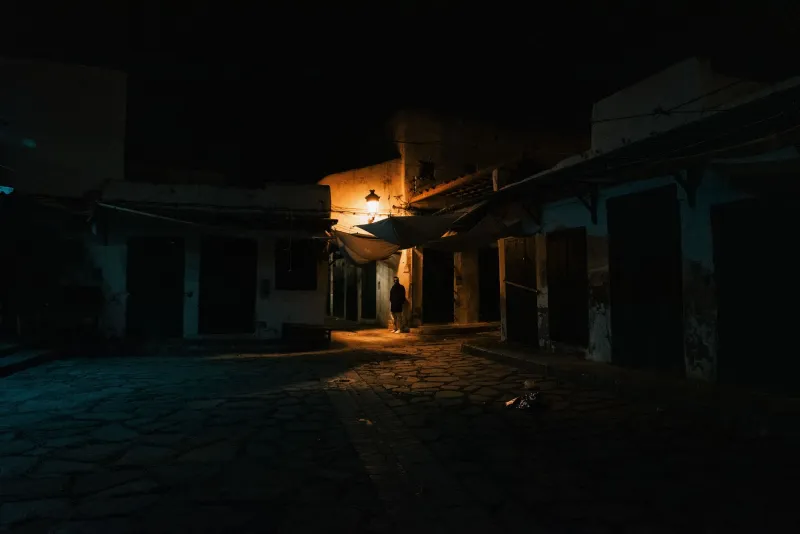
There is a moment — you will recognise it when it comes — when the itinerary stops feeling like a framework and starts feeling like a cage. You are standing at the entrance to Marrakech's medina, your phone's blue dot blinking insistently, a list of curated riads and recommended souks loaded and waiting, and yet something in you resists. A narrow alley curves away to the left, smelling of cardamom and something floral you cannot name. A woman in an embroidered djellaba disappears around its corner. The map says nothing useful about what lies beyond.
This is the invitation. The question is whether you are prepared to accept it.
The Philosophy of Purposeful Drift
The French Situationists had a word for it: dérive. Literally, a drift — an unplanned journey through urban landscapes guided by the architecture of instinct rather than the architecture of streets. Conceived by Guy Debord in 1950s Paris, the concept was radical in its insistence that a city reveals itself most honestly to those who surrender the desire to conquer it.
Decades later, the dérive feels newly relevant — and nowhere more so than in the context of solo female travel. To wander intentionally is not to be careless. It is to be fully, attentively present: reading the grain of a place, following curiosity, allowing the unexpected to lead. It is, in short, the highest expression of confidence a traveller can demonstrate. Not the confidence of the person who knows exactly where they are going, but the far more sophisticated confidence of the person who trusts themselves to navigate wherever they end up.
For women who travel alone, this distinction matters enormously. We are so often conditioned — by well-meaning friends, by safety rhetoric, by the travel industry itself — to over-plan, to over-map, to treat unfamiliar places as problems to be managed rather than experiences to be inhabited. The result is a kind of armoured travel: technically efficient, emotionally guarded, and fundamentally disconnected from the texture of the places we visit.
What the Backstreets Know
Lisbon taught me this more thoroughly than anywhere else. The city's famous miradouros — its viewpoints, its postcard vistas — are genuinely beautiful. They are also, by mid-morning, crowded with tour groups and selfie sticks. The Lisbon that stays with you is found elsewhere: in the Mouraria neighbourhood at the hour when elderly men bring their chairs out onto the pavement; in the tiled staircases of Alfama that lead, apparently, to nowhere in particular; in the small tasca where the owner brings you a glass of ginjinha you did not order because she has decided you need it.
None of these encounters were on a list. All of them were made possible by walking without a destination and accepting what arrived.
The same logic applies across wildly different landscapes. In the Scottish Highlands, abandoning the marked trail — sensibly, with appropriate gear and weather awareness — reveals a relationship with moorland that no viewpoint car park can replicate. In the backstreets of Kyoto's Nishiki district, the deliberate wrong turn leads to the craftsman's workshop rather than the tourist's shop front. In Oaxaca's quieter colonias, the unscripted afternoon produces a conversation with a local artist that reshapes your understanding of the entire region.
The pattern is consistent: the best discoveries are structurally incompatible with itineraries.
Staying Safe While Staying Spontaneous
Here is where the conversation usually stalls. But is it safe? The question is legitimate, and it deserves a serious answer rather than a dismissive one.
Intentional wandering is not the same as wilful naivety. There are frameworks that allow spontaneity to coexist with sound judgement, and the experienced solo female traveller learns to hold both simultaneously.
Know your anchors. Before you abandon the map, establish fixed points: your accommodation's address written on paper (not just stored in a dying phone), the name of the nearest landmark, and a rough sense of the neighbourhood's geography. You are not planning a route — you are building a safety net.
Read the light. The quality of exploration changes dramatically with the hour. Daytime wandering in most urban environments carries significantly different risk to the same activity after dark. This is not a reason to stay indoors at night — it is a reason to be honest about context. Marrakech's medina at noon and at midnight are two entirely different propositions.
Trust the slow read. The instinct that tells you a situation feels uncomfortable is not anxiety — it is data. The solo female traveller who has learned to distinguish between the discomfort of the unfamiliar (productive, worth leaning into) and the discomfort of genuine unease (worth acting on swiftly) possesses a navigational tool more reliable than any application.
Engage deliberately. Ask a shopkeeper for directions you do not need. Order something you cannot identify. Accept the cup of tea. These small acts of voluntary engagement create a web of human connection that is, in practice, one of the most effective safety mechanisms available to a lone traveller.
The Map as a Starting Point, Not a Script
None of this is an argument against preparation. The woman who arrives in a new city having read nothing, planned nothing, and considered nothing is not adventurous — she is simply unprepared. The map, the guidebook, the carefully assembled list of neighbourhoods worth exploring: these are valuable. They are the scaffolding from which genuine discovery is launched.
But scaffolding is meant to come down.
The traveller who has done her research and then sets it aside — who walks out of her hotel on the first morning with a general sense of direction and a willingness to be surprised — is operating from a position of informed freedom. She is not lost. She is, in the truest sense, found: present, responsive, alive to the particular intelligence of the place she has chosen to inhabit, however briefly.
There is a kind of travel that produces photographs. And there is a kind of travel that produces a changed person. The difference, more often than not, comes down to whether you were willing, at some point, to put the map away.
The alley in Marrakech is still there. It is still curving away to the left, still smelling of cardamom. The woman in the embroidered djellaba has long since gone about her day.
But the next invitation will come. Be ready to accept it.