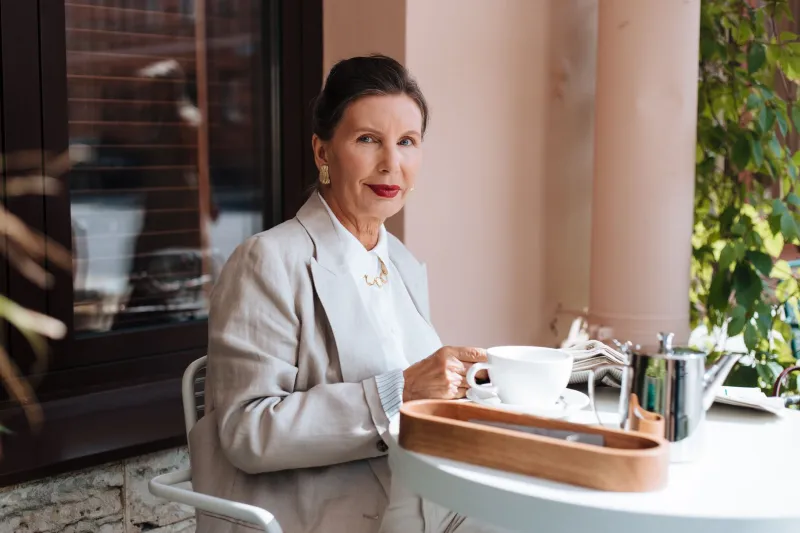
The Table for One Is the Best Seat in the House
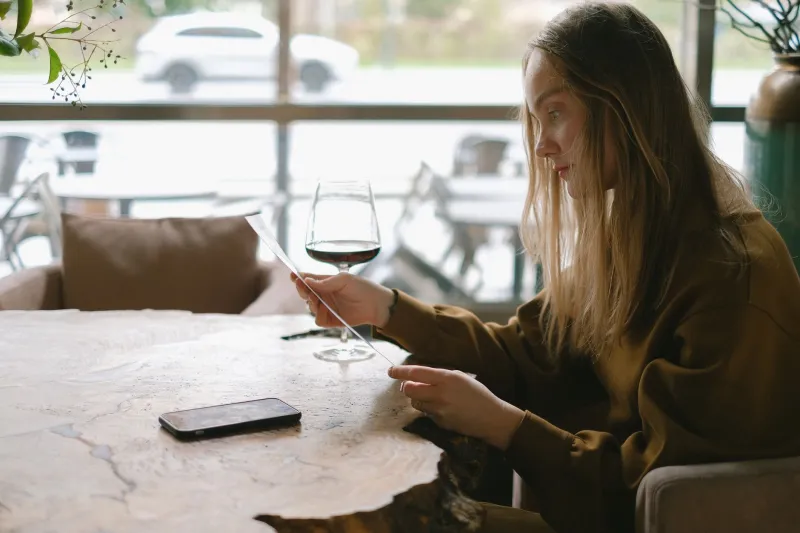
Let us begin with an admission. There is a particular brand of British social anxiety — refined over centuries of queuing culture and performative self-deprecation — that makes the act of entering a restaurant alone feel, to many women, like a minor ordeal. The moment of announcing "just me" to a maître d'. The careful arrangement of one's phone and book and bag to suggest purposefulness rather than abandonment. The awareness, real or imagined, of being observed.
This anxiety is, I would argue, both entirely understandable and almost entirely unfounded. And the women who have moved beyond it — who have not merely made peace with solo dining but built entire journeys around it — are having, by every account, a rather magnificent time.
The Reservation as Departure Point
Culinary solo travel is not a new phenomenon, but it has acquired a new coherence and a new confidence in recent years. Where once a woman might have visited Paris and, almost incidentally, eaten well, the contemporary culinary traveller reverses the logic entirely. The restaurant comes first. The trip is constructed in its service.
This might mean booking a table at a three-Michelin-starred restaurant in San Sebastián and arranging flights, accommodation, and three days' worth of supporting meals around that singular reservation. It might mean following a chef whose work you have admired from afar — to their new opening in Copenhagen, to their collaborative dinner in Oaxaca, to their pop-up in Lisbon. The food is the destination. Everything else is context.
"I stopped apologising for it about three years ago," says Miriam, a 44-year-old solicitor from Edinburgh who has organised solo trips around restaurant reservations in Tokyo, Lyon, and most recently, Lima. "People would ask where I was going and I'd say 'Peru' and they'd ask what I was doing there and I'd say 'eating at Central' and they'd look at me as though I'd said something eccentric. But it's not eccentric. It's just having a clear sense of what you value."
Central, Virgilio Martínez's landmark Lima restaurant — which held the top position in the World's 50 Best Restaurants list — is precisely the kind of institution around which a journey justifies itself. The tasting menu is a vertical survey of Peruvian ecosystems, from ocean floor to high Andes. To experience it fully, alone, with no social obligation other than one's own attention, is — as Miriam puts it — "the closest I have come to a religious experience that didn't involve a church."
On Being Seated Alone, and Why It Is an Advantage
The solo diner occupies a curious position in the restaurant ecosystem. In lesser establishments, she may be seated near the kitchen, or by the door, or at a table designed for two in a way that makes the empty chair feel like an accusation. This is, frankly, poor hospitality, and it is worth knowing that the finest restaurants in the world tend not to practise it.
At the highest level of dining, the solo guest is frequently the most attentive one in the room. Unencumbered by conversation, she notices the temperature at which each course arrives, the precise moment a sauce changes texture, the way a sommelier's recommendation shifts across three pairings. Chefs know this. Many of them actively appreciate it.
"A table of one is often our most engaged guest," a head chef at a Basque restaurant in Bilbao told me, on the condition I didn't name the establishment. "They are there for the food. Completely. There is something very pure about cooking for someone like that."
This observation has a practical implication: communicating your status as a serious solo diner, when booking or upon arrival, can meaningfully alter your experience. A brief, confident note in your reservation — "solo diner, extremely interested in the full menu experience" — signals engagement rather than isolation. Many restaurants will respond with additional courses, more detailed explanations from the kitchen, or an invitation to visit the pass.
Restaurants That Welcome You
While exemplary solo dining experiences exist across the world, several establishments have developed a particular reputation for honouring the single guest.
Geranium, Copenhagen. Rasmus Kofoed's three-Michelin-starred restaurant, perched above the Fælledparken park, offers an intimate counter experience that is genuinely ideal for the solo traveller. The kitchen-facing seats provide an unobstructed view of service in motion, and the team's attentiveness to individual guests is well-documented among food writers.
Septime, Paris. Bertrand Grébaut's beloved Oberkampf institution has long cultivated a reputation for warmth toward solo diners. Reservations are notoriously competitive — the online booking system opens at specific times and fills within minutes — but the effort is consistently rewarded. The natural wine list alone warrants the trip from London.
Bar Brutal, Barcelona. For those who prefer their culinary travel without white tablecloths, this natural wine bar in El Born offers counter seating, exceptional small plates, and a convivial atmosphere in which the solo diner is not merely accommodated but genuinely at home.
Noma Projects, Copenhagen. In Noma's current iteration as a food laboratory and event space, solo bookings for special dinners are available and, given the experimental nature of the work, arguably best experienced without the distraction of shared reaction.
Endo at the Rotunda, London. For those who prefer not to leave the country, Endo Kazutoshi's omakase restaurant in White City is structured around a chef's counter that renders solo dining not merely acceptable but architecturally correct.
The Practical Architecture of a Culinary Trip
Building a journey around a single reservation requires a particular approach to planning. Begin with the booking — not the flight. Secure your table first, because a cancelled reservation is far easier to recover from than a non-refundable flight to a city where you cannot now get into the restaurant that justified the journey.
For high-demand restaurants, familiarise yourself with the booking system in advance. Many of the world's most sought-after tables open reservations on a rolling basis — thirty, sixty, or ninety days ahead — at a specific time. Set a calendar reminder. Be at your laptop. This is not excessive; it is the same diligence one would apply to securing Glastonbury tickets, and the reward is considerably more refined.
Once the anchor reservation is confirmed, build outward. A culinary trip is not one extraordinary meal; it is a progression. Research the neighbourhood around your restaurant for breakfast spots, market visits, and informal lunches. Read local food journalism — in Spain, El Comidista; in France, Le Fooding — to find the places that do not appear in international guides but are where chefs eat on their nights off.
Learn enough of the local language to discuss the menu with some specificity. "C'est excellent" covers a great deal of ground in France, but the ability to ask about a technique or an ingredient transforms a transaction into a conversation.
A Final Word on the Empty Chair
The social discomfort around dining alone is, at its root, a discomfort with being seen to be without company — as though solitude were evidence of something lacking. It is, in fact, evidence of the opposite: a confidence in one's own appetite, a clarity about what one finds pleasurable, and a refusal to subordinate extraordinary experiences to the logistics of finding someone willing to share them.
The table for one is not a consolation. It is a choice. It is, increasingly, the most considered choice in the room.
Book the restaurant. Build the trip. Eat with your full attention.
The chair across from you is not empty. It simply isn't needed.