Beyond the Phrase Book: How Learning a Language Properly Changes the Traveller You Become

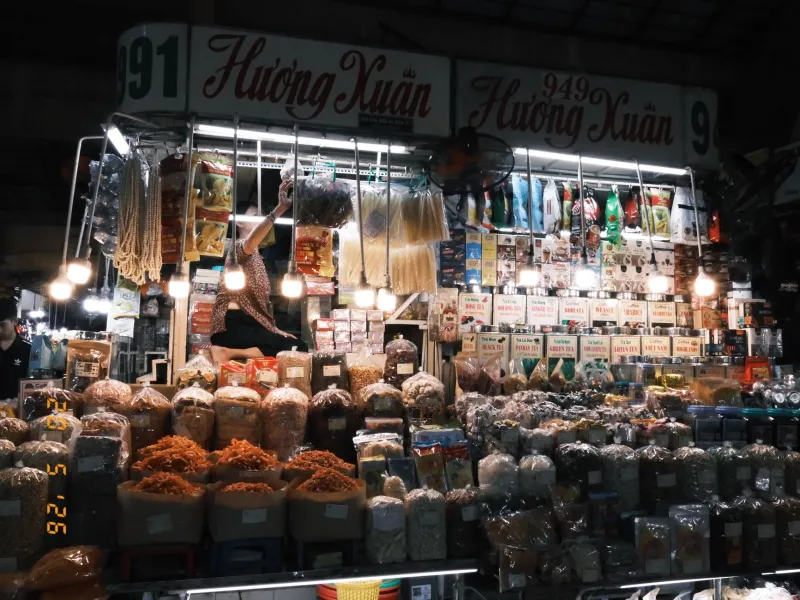
Most of us know the survival register. Una cerveza, por favor. L'addition, s'il vous plaît. Dov'è la stazione? These phrases are useful, even charming, and they serve their purpose admirably in the transactional theatre of tourism. But they do not unlock a place. They do not grant access to the texture of daily life, to the particular rhythm of humour, to the conversations that happen not at the hotel reception desk but at the bus stop, the kitchen table, the neighbourhood market on a Tuesday morning.
There is a threshold in language learning that most travellers never cross, and it is precisely at that threshold that everything changes.
The Difference Between Visiting and Belonging
Linguists describe something called communicative competence — the ability not merely to deploy correct grammar but to understand the social and cultural rules governing how language is actually used. It is the difference between knowing that the Italian prego can mean both "you're welcome" and "please go ahead" and intuitively reading which context demands which. It is the difference between knowing the words and knowing the music.
For travellers, reaching even a modest level of genuine conversational proficiency — well beyond the phrase book, comfortably below perfection — produces a shift in how a place is experienced that is difficult to overstate.
Jessica, 36, a solicitor from Leeds, spent three months in Seville during a career break, studying Spanish at a language school each morning and living with a local family. "I arrived thinking my GCSE Spanish would be a decent foundation," she laughs. "It was not. The first fortnight was genuinely humbling — I understood almost nothing at dinner." By the end of her second month, however, something had shifted. "I started dreaming in Spanish, which everyone says is the sign. But more than that, I started understanding the jokes. And once you understand what makes people laugh, you understand everything."
The jokes matter because humour is culturally specific in a way that vocabulary is not. It encodes values, histories, social hierarchies, and shared references that no guidebook captures. When a language learner reaches the point of genuine laughter — not polite acknowledgement but spontaneous, unmediated laughter — she has crossed into a different relationship with a place.
Agency, Autonomy, and the Unlocked City
For women travelling alone, language proficiency carries an additional and particularly significant dimension: it fundamentally alters the experience of agency.
The tourist who does not speak the local language is, however comfortably, dependent. Dependent on the hospitality of English speakers, on translation apps, on the goodwill of hotel staff, on restaurants with picture menus. This dependency is not merely logistical; it is psychological. It positions the traveller as a recipient of experience rather than an active participant in it.
Conversational fluency reverses this dynamic entirely. Suddenly, the city is navigable on its own terms. The woman who can ask a pharmacist a detailed question, negotiate at a market stall, follow a heated conversation between neighbours, or read the community noticeboard outside the local church inhabits an entirely different version of the same city as the tourist who cannot.
Amara, 42, a GP from Cambridge, spent a sabbatical year in Lyon, where she committed to learning French to a standard she describes as "genuinely functional, not performatively fluent." She enrolled in evening classes, joined a local running club, and refused to default to English even when her interlocutors offered. "The running club was transformative," she says. "Those women — teachers, nurses, a retired judge — became my community. They corrected my grammar mercilessly and invited me to their homes. None of that would have happened if I'd been the English woman who smiled and nodded."
The Self You Become in Another Language
There is a well-documented psychological phenomenon whereby individuals report experiencing themselves differently when operating in a second language. Research suggests that the emotional distance created by a foreign tongue can, paradoxically, make speakers more measured, more considered, and in some cases more courageous. The social scripts that govern behaviour in one's mother tongue — the ingrained habits of deference, the reflexive self-deprecation so characteristic of the British — do not transfer automatically. In a second language, you are, to some degree, making yourself up as you go.
This can be profoundly liberating. Women who have lived and communicated in a second language frequently describe a loosening of the social constraints that ordinarily govern their self-presentation. The linguistic stumble that would feel mortifying in English becomes, in French or Portuguese or Japanese, simply part of the process — expected, even endearing.
"I became more direct in Italian," says Rachel, 29, a graphic designer from Bristol who spent a year in Bologna. "Partly because the grammar doesn't accommodate the same levels of hedging that English does — you can't be quite as mealy-mouthed. But also because I was so focused on being understood that I stopped worrying about being perfectly polished. It was the most honest I've ever communicated."
Practical Pathways for the Committed Learner
For British women considering this kind of linguistic investment, a few approaches have proved reliably transformative.
Immersive language schools — particularly those that pair formal tuition with homestay accommodation — remain one of the most effective routes to rapid progress. Organisations such as the Institut Français in London offer structured pathways before departure, as do the Goethe-Institut and Instituto Cervantes.
Extended stays over repeated short visits compound learning in ways that no amount of weekend city-breaking achieves. Three months of genuine daily immersion outperforms three years of annual holidays many times over.
Joining local activity groups — sports clubs, book groups, community choirs, volunteer organisations — provides the conversational context that classroom learning cannot replicate. Language learned in social settings, around shared purpose, is language that sticks.
Embracing the discomfort of error is perhaps the single most important mindset shift. The women who progress fastest are invariably those who speak badly, frequently, and without embarrassment — who treat every misunderstanding as data rather than defeat.
The phrase book will always have its place. But the woman who ventures beyond it discovers something that no tourist infrastructure can provide: the particular, irreplaceable sensation of being genuinely understood in a language that is not her own — and of understanding, in return, far more than words.