The Ordinary Hours Abroad: Why the Most Revealing Moments of Travel Happen in the Supermarket Queue

The guidebook will send you to the cathedral, the old town, the celebrated viewpoint at dusk. And you will go, because these places are often genuinely worth your time. But there will come a moment — perhaps on the third day, perhaps on the morning after the big excursion — when you find yourself simply needing milk. Or a stamp. Or a place to sit for an hour without purpose. And in that moment, if you are paying attention, the city will finally begin to show you who it actually is.
This is the unglamorous hour. It is also, more often than not, the most interesting one.
The Myth of the Curated Experience
Modern travel has become extraordinarily efficient at pre-selecting our experiences. Before we have left home, we have bookmarked the restaurants, saved the walking routes, and read three separate accounts of the best time of day to visit the market. This preparation is not without value — nobody wishes to waste precious days floundering — but it comes with a cost that we rarely acknowledge: it insulates us from the unscripted.
The city that tourism presents is a performance, and a professional one at that. It has been refined through decades of visitor expectation into something comprehensible, navigable, and reliably photogenic. But it is not, in any complete sense, real. The real city is the one that continues operating when the tourists have returned to their hotels — the one that queues at the post office on a Monday morning, argues cheerfully over vegetable prices, and conducts its entirely unremarkable business without any awareness of being observed.
Accessing that city requires a particular kind of willingness: the willingness to be bored, to be confused, to be briefly and productively lost in the mundane.
What the Supermarket Actually Teaches You
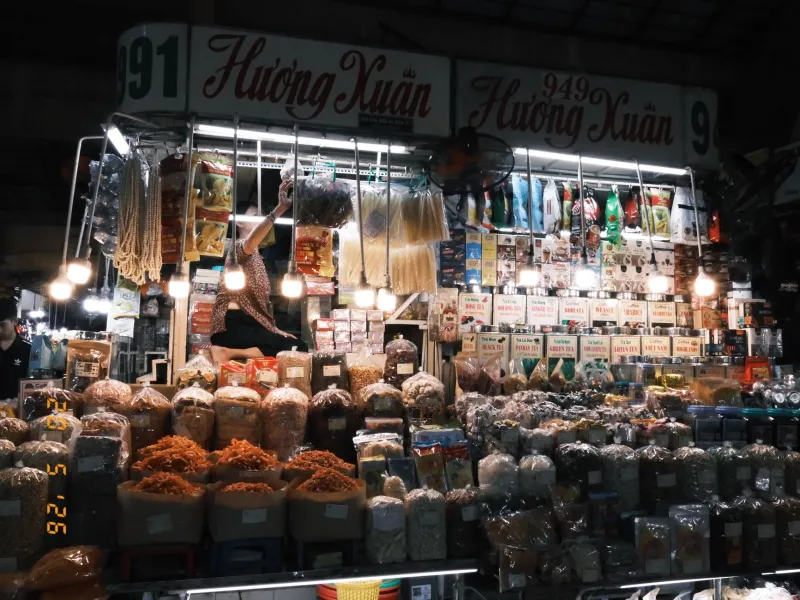
I have learned more about a country from its supermarkets than from most of its museums. This is not hyperbole. The supermarket is a cross-section of daily life so unguarded that it functions almost as an anthropological exhibit — except that nobody is performing for you, which makes it infinitely more instructive.
In a Lisbon supermarket, I once spent forty minutes simply observing the cheese counter — the varieties on offer, the confidence with which elderly women made their selections, the brief and apparently serious negotiation between a man and the counter assistant about the precise thickness of his slice. I understood something about Portuguese domestic life in those forty minutes that no amount of fado tourism had conveyed.
In a small supermarket in rural Brittany, the arrangement of the wine aisle — the assumption of knowledge it made, the absence of anything resembling the 'helpful' labelling British supermarkets deploy for the uncertain shopper — told me something about the relationship French daily life has with pleasure that felt both humbling and clarifying.
Notice what is abundant. Notice what is absent. Notice who shops at what hour and how they dress to do so. Notice whether people greet the staff, and whether the staff greet back. The supermarket is the city without its Sunday best.
How to Practise Intentional Boredom
This sounds contradictory — boredom, after all, is something we typically seek to avoid — but intentional boredom is a discipline, and a rewarding one. It means choosing, on at least one day of any trip, to do nothing that appears on any list of recommended activities. It means having a coffee at a café that serves office workers rather than tourists, sitting with it for longer than feels comfortable, and simply watching.
Practically speaking, this might look like the following:
Do your laundry in a public launderette. The launderette is a leveller. Everyone is waiting, everyone is slightly bored, and the conditions are therefore unusually conducive to conversation. You will encounter people who have no particular interest in performing their city for you, which makes them far more interesting company than the cheerfully rehearsed guide.
Post something. Finding a post office in a foreign city, navigating its particular bureaucratic logic, and successfully dispatching a postcard or parcel is a small adventure in institutional culture. Post offices reveal an enormous amount about a country's relationship with its own administration — the queuing customs, the paperwork expectations, the degree of warmth or formality between strangers in a public service context.
Sit in a park on a weekday morning. Not a famous park. A neighbourhood park, preferably one with a children's play area or a cluster of benches occupied by retired people. Watch the rhythm of the morning. Notice who feeds the pigeons, who reads the newspaper, who arrives with a dog and stays too long. The park on a Tuesday is a city's private sitting room.
Take public transport with no particular destination. Board a tram or a bus, sit near the back, and ride it for forty minutes. Do not look at your phone. Watch where people get on and off, what they carry, how they hold themselves in public space. Alight somewhere unfamiliar and walk back.
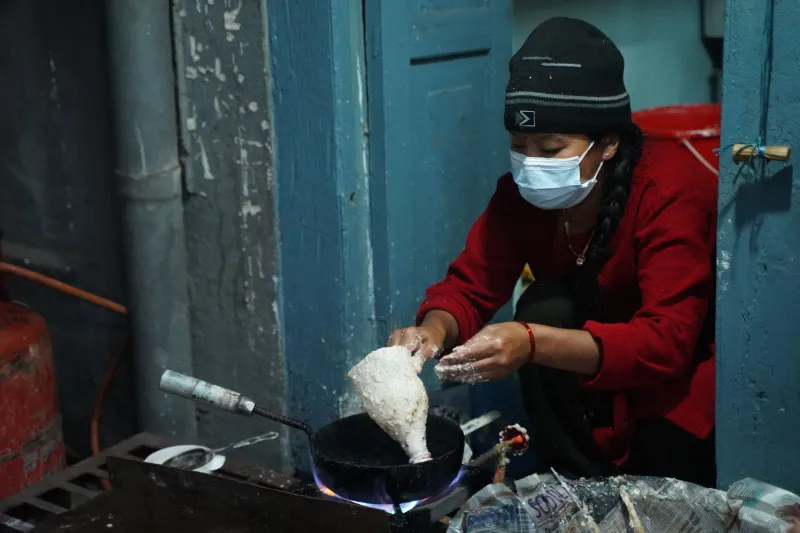
Cook something. If your accommodation permits it, visit a local market or food shop and prepare a simple meal. The act of cooking abroad — of navigating unfamiliar packaging, of substituting unknown ingredients, of making something recognisable from what the local shelves offer — is one of the most pleasurable forms of cultural translation available.
The Café at Working Hours
There is a particular quality to a café at ten o'clock on a weekday morning that no other hour replicates. The tourists have not yet arrived in force; the lunch crowd is still two hours distant. What remains is the city at work — the architect with her drawings spread across the table, the two friends conducting what appears to be an ongoing and extremely serious discussion about something personal, the man who has clearly been sitting at the same corner table for so long that the staff bring his coffee without being asked.
This is the hour to be in a café if you want to understand what the café actually means to the city — whether it is a workspace, a social institution, a refuge, or simply a place to ingest caffeine efficiently before returning to the office. In Vienna, the answer is manifestly different from the answer in Milan, which differs again from the answer in Athens or Glasgow. The hour reveals the function, and the function reveals the culture.
The Gift of Not Being Seen as a Tourist
There is, beneath all of this, a deeper reward. When you participate in the ordinary rhythms of a city — when you queue for your bread alongside the woman who does so every morning, when you navigate the recycling bins with the same mild confusion as the new resident in the flat above yours — you become, briefly and beautifully, less visible as an outsider. Not invisible, precisely, but less categorically foreign. You are simply a person doing what people do.
This is not about pretending to belong somewhere you do not. It is about meeting a place at the level of its daily life rather than its curated highlights — and finding, in that meeting, a texture and an intimacy that no landmark, however magnificent, can quite provide.
The unglamorous hours are where the city lives. Go and find it there.