Higher Ground: The British Women Who Traded the Lowlands for the Alps and Never Looked Back
There is a particular kind of exhaustion that doesn't announce itself. It accumulates quietly — in the morning commute, in the performance review, in the group chat that never really says anything — until one day you are standing in your kitchen in Clapham or Cheltenham or Edinburgh and you notice, with something approaching alarm, that you cannot remember the last time you felt entirely present in your own life. For a growing number of British women, the answer to that feeling has not been a new therapist or a longer holiday, but something far more radical: a move to the mountains.
Not a weekend retreat. Not a yoga sabbatical. A life.
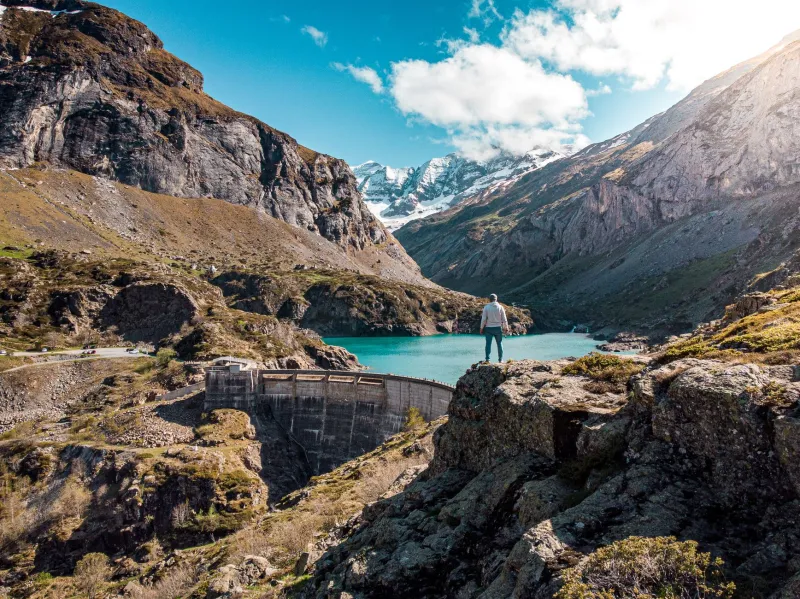
Across the alpine communities of Europe — the Dolomites, the French Alps, the Pyrenees, the Swiss Valais — British women in their thirties, forties, and fifties are quietly remaking themselves in altitude. Some arrive with partners or families in tow. Many come alone. Some intend to stay for a season and find, years later, that they are still there. What unites them is not a shared biography but a shared instinct: that the mountains were asking them something the city could not.
What the Silence Costs You
Sarah Thornton, 44, left a senior marketing role in Bristol four years ago to take over a small gîte in the Hautes-Pyrénées. She is precise about the timeline, the way people are when they've had to justify a decision many times over. "I'd been successful by every measure I'd been taught to use," she says. "And I was genuinely, deeply unhappy. Not dramatically — just quietly. The way you can be unhappy for years without quite naming it."
The first winter in the mountains was, by her own account, brutal. The isolation was real. The language barrier was real. The physical demands of running a property in a snowbound village were nothing like the brochure version of rural life she had half-imagined. "I cried a lot," she says, without embarrassment. "But I also started sleeping. Properly sleeping. And I hadn't done that in about a decade."
There is something almost physiological in the accounts these women give. The altitude, the cold, the seasonal rhythm, the requirement to be physically present in a landscape that does not negotiate — all of it seems to produce a kind of enforced clarity. The noise of modern British womanhood — the competing demands of ambition and likability, productivity and care, visibility and modesty — does not survive long above 1,500 metres.
The Reckoning the City Postpones
Psychologists have long noted the restorative effect of natural environments on cognitive function and emotional regulation. But the women I spoke to describe something more specific than stress relief. They describe a reckoning.
Jo Pemberton, 51, moved to a small village in the Italian Dolomites after her youngest child left for university. She had spent twenty-three years as a secondary school teacher in Yorkshire, a career she loved and from which she felt, nonetheless, entirely depleted. "I think the city — or maybe just the pace — lets you avoid questions," she says. "There's always something else to do, somewhere else to be. The mountains don't give you that. In January, when the passes are closed and the days are short, you are very much alone with yourself."
What she found in that confrontation was not the crisis she'd feared but something closer to inventory. "I realised I'd been performing a version of myself for so long that I'd forgotten there were other versions. Quieter ones. Less useful ones, maybe, but more mine."
This theme recurs with striking consistency. The mountains, these women suggest, do not transform you so much as they subtract — stripping away the accumulated performance of decades until something more essential becomes visible. Whether that process is comfortable is another matter entirely.
Ambition at Altitude
Not all of these relocations are retreats from ambition. Some are redirections of it.
Clare Ashworth, 38, left a career in finance in London to establish a small-batch textile business in the French Alps, working with local shepherds to source and process wool from heritage breeds. She is emphatic that she did not leave her drive behind. "I brought it with me," she says. "I just pointed it at something different. Something I could hold in my hands."
What the mountains changed, she argues, was not her capacity for hard work but her relationship to its purpose. "In the City, I was working to accumulate. Up here, I'm working to make something. That's a different kind of ambition, and I think it's a better one. For me, anyway."
There is a broader cultural conversation embedded in her words — one about the particular shape that female ambition is permitted to take in professional Britain, and the cost of conforming to it. The women who have moved to the mountains are not, by and large, opting out of ambition. They are opting out of the specific performance of it that urban professional life demands.
What Seasonal Living Teaches
One of the most consistent revelations these women describe is the effect of living seasonally — truly seasonally, in the way that mountain communities have always done. The summer of relentless physical activity. The autumn of preparation and harvest. The winter of withdrawal and introspection. The spring, arriving with almost violent beauty, of renewal.
"I'd never really experienced winter before," says Jo Pemberton. "In England, winter is just a slightly gloomier version of the rest of the year. In the Dolomites, it is its own country. You learn to respect it, and then you learn to love it, and then you realise that you'd been running from stillness your entire adult life."
For Sarah Thornton, the seasons have reordered her relationship with time itself. "I used to think about time in quarters — financial quarters, school terms, project timelines. Now I think about it in terms of light. How much there is. Whether the passes will be open. When the walkers will come. It sounds small, but it changes everything about how you plan, how you rest, how you value a day."
The Question the Mountains Keep Asking
Perhaps the most honest thing one can say about the women who have moved to the mountains is that they have not found answers so much as they have learned to sit with better questions. The city, with its relentless forward momentum, is extraordinarily effective at making certain questions feel irrelevant or self-indulgent. Up here, those questions become unavoidable.
What do I actually want? What am I afraid of? What have I been mistaking for contentment?
None of these women would claim that the mountains have made their lives easier. Several have faced real hardship — financial precarity, loneliness, the particular grief of watching a former life recede. But none, when asked directly, say they would return to what they had.
"The mountains clarify," says Clare Ashworth simply. "That's the only word for it. And once you've been clarified, it's very difficult to go back to the blur."
For any woman standing in her kitchen — in Clapham, in Cheltenham, in Edinburgh — feeling that particular, unannounced exhaustion, that might be the most important thing to know. The mountains are not an escape. They are, in the most demanding and generous sense, an arrival.