Where the Sun Refuses to Sleep: A Woman's Guide to Norway's Arctic Summer
Where the Sun Refuses to Sleep: A Woman's Guide to Norway's Arctic Summer
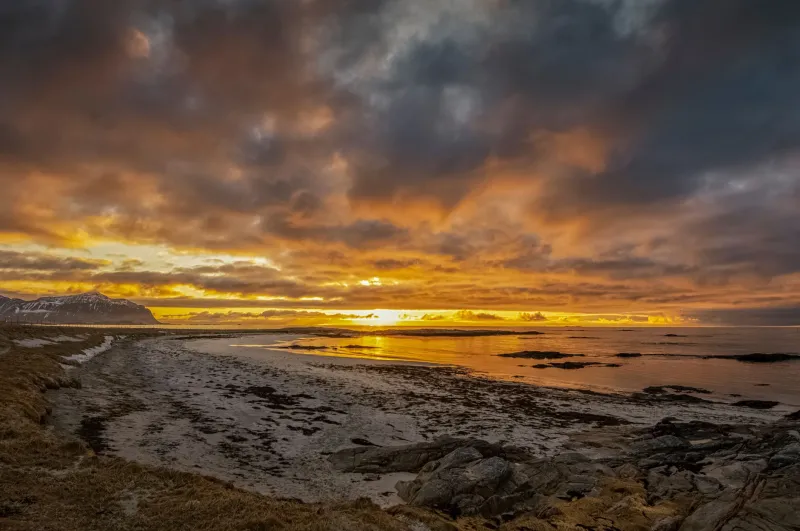
There is a particular kind of madness that settles in around two o'clock in the morning when the sun is still hanging above the Lofoten ridgeline, throwing gold across the water as serenely as it might at teatime. You are not tired, exactly. You are unmoored. The ordinary architecture of your day — the rhythm of meals, the pull of darkness, the quiet permission that night grants you to stop — has been dismantled entirely. What remains is something rarer and more unsettling: pure, uninterrupted presence.
Norway's far north in summer is one of the world's great disorienting gifts. For the solo woman traveller, it offers something beyond spectacular scenery. It offers a recalibration.
Getting There: Simpler Than You Think
From the UK, the far north of Norway is more accessible than its remoteness suggests. Direct flights from London, Edinburgh, and Manchester connect to Tromsø — the self-styled capital of the Arctic — in roughly three hours. Norwegian Air and SAS both serve the route, with prices that reward booking several months in advance. From Tromsø, the world opens northward and westward: the Lofoten Islands, the Vesterålen archipelago, the Senja coastline, and the vast plateau of Finnmark all lie within reach by ferry, hire car, or the extraordinary Hurtigruten coastal route.
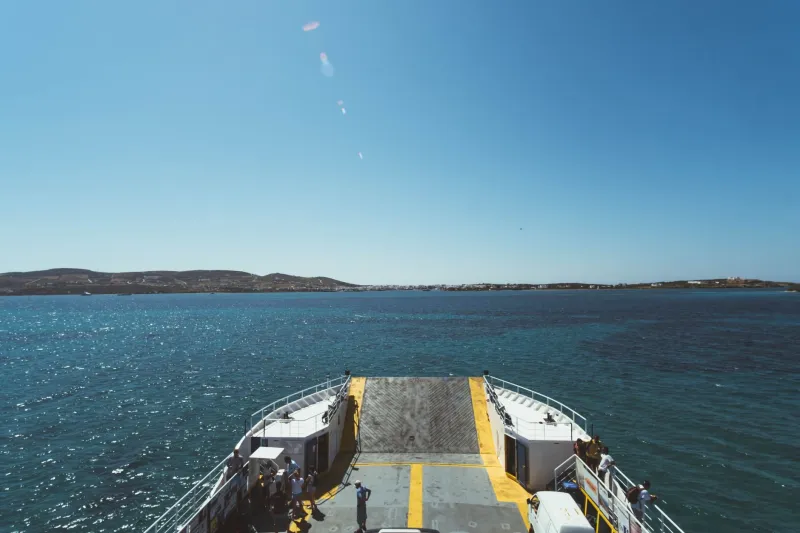
For those who prefer their arrival to carry a sense of ceremony, the overnight train from Oslo to Bodø — the northernmost point on Norway's rail network — is an experience in itself. From Bodø, ferries carry passengers onward to Lofoten in just under four hours, the crossing threading through a landscape that looks, on clear days, as though it has been assembled from a painter's most ambitious imagining.
The Lofoten Islands: Where to Begin
Most travellers arriving in the far north for the first time find their footing in Lofoten, and wisely so. The archipelago's fishing villages — Henningsvær, Reine, Å, Nusfjord — are compact enough to navigate on foot and striking enough to hold attention for days without effort. The iconic rorbuer, traditional fishermen's cabins perched on stilts above the water, are now widely available as self-catering accommodation, ranging from the charmingly rustic to the quietly luxurious.
For solo travellers, the rorbu offers something particularly valuable: genuine solitude without loneliness. You are alone in your cabin, yes, but the village hums around you — the smell of stockfish drying on wooden racks, the sound of small boats returning, the companionable presence of other travellers gathering at the communal fire pit as the midnight sun slides sideways across the sky rather than setting.
Henningsvær, built across a cluster of small islands connected by narrow bridges, is perhaps the most photogenic of the villages and supports a lively arts scene. The gallery at Kaviar Factory — housed improbably in a former fish roe processing plant — is worth an afternoon of serious attention. Reine, further south-west, is wilder and more vertiginous, its dramatic peaks reflected in the still waters of the fjord below.
The Hurtigruten: Travelling by Light
If Lofoten is where you begin to understand the midnight sun, the Hurtigruten coastal ferry is where you begin to feel it in your bones. This legendary route, which has served Norway's coastal communities since 1893, runs the length of the country from Bergen to Kirkenes, stopping at dozens of ports along the way. Travellers may board and disembark as they please, making it an ideal framework for an unhurried northward journey.
Above the Arctic Circle, the Hurtigruten becomes something close to a philosophical experience. Standing on deck at midnight, watching the sun arc low over the fjords without ever quite surrendering to the horizon, you begin to understand why the Norse concept of time was never quite as linear as the one we imported from elsewhere. Time here is not divided into day and night. It simply continues.
The ships themselves vary in age and character; the older vessels carry a pleasingly workmanlike atmosphere, their lounges populated by a mix of Norwegian locals, birdwatchers, and the occasional solo woman with a notebook and an expression of quiet determination. Book a single cabin with a window, and you will find yourself waking at odd hours not from any alarm but from the quality of the light — a rose-gold flood through the curtains that the body cannot quite dismiss as ordinary.
Off-Grid Cabins and the Art of Doing Nothing
For those who wish to go further still — geographically and inwardly — the archipelago of Senja, Norway's second-largest island and still largely undiscovered by international tourism, offers off-grid cabin rentals of exceptional beauty. Several operators now offer remote hytte (cabins) accessible only by boat or a moderate hike, with no Wi-Fi and no neighbours within earshot.
Spending three or four nights in such a place during the solstice period is an experience that resists easy description. Without darkness to enforce rest, without a schedule to enforce movement, you find yourself operating on an entirely different logic. You sleep when you are genuinely tired. You eat when you are genuinely hungry. You walk when the landscape calls you, which is often, and you sit very still when it does not. Many women who have made this particular journey report that it is the closest they have come, in adult life, to genuine stillness.
Practical note: bring a quality eye mask and earplugs regardless of how certain you are that you will manage without them. The midnight sun is extraordinary; it is also, after several consecutive sleepless nights, extremely persistent.
What to Know Before You Go
The peak solstice period runs roughly from mid-June to mid-July, with the most dramatic midnight sun visible from late June. Temperatures in Lofoten and Tromsø during this period are mild rather than warm — expect highs of 15–18°C and pack layers accordingly. Mosquitoes can be a consideration in inland and forested areas; a good repellent is worth its weight.
Norway is not a budget destination, but careful planning makes it manageable. Self-catering in a rorbu or hytte significantly reduces costs compared with hotel stays. The ferry network is efficient and often cheaper than flying between northern points. Many of the finest experiences — hiking, swimming in fjords, watching the midnight sun from a headland — cost nothing at all.
The Norwegian people, it should be said, are exceptionally well-disposed towards solo travellers and towards women travelling alone. There is a cultural matter-of-factness about independence here that is both refreshing and quietly affirming.
The Woman Who Stayed
There is a particular type of traveller who goes to Norway's far north for a week and begins, somewhere around day four, to understand why people have been known to stay for months. It is not merely the beauty — though the beauty is relentless — nor the novelty of the midnight sun, which fades from spectacle into something stranger and more intimate. It is the way the light refuses to let you be anyone other than who you are.
Without the mercy of darkness, there is nowhere to hide, not from the landscape and not from yourself. The far north, in its luminous summer excess, has a way of stripping away the performative layers that accumulate in ordinary life and leaving something more essential in their place. Women who have made this journey often struggle to explain what changed. Only that something did, and that it was worth every sleepless, sun-drenched hour.