Ground Level: The Slow Overland Journey from Britain to Morocco That Changes Everything
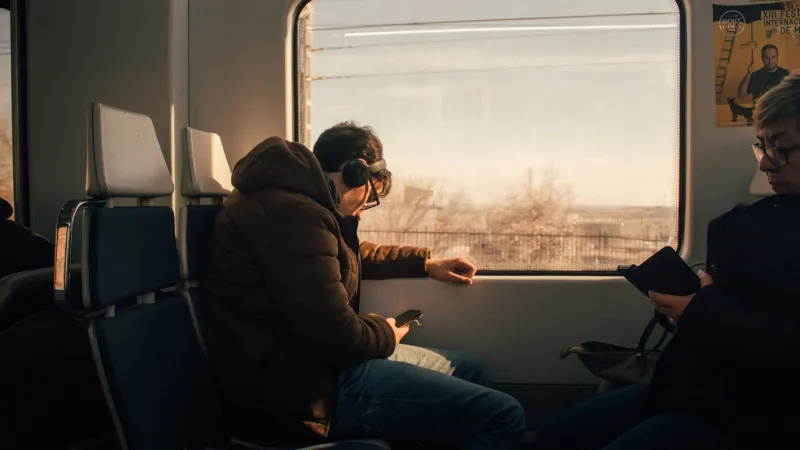
There is a particular kind of arrival that a flight simply cannot offer. You step off a plane into Marrakech or Casablanca and the world has changed without you — the air is different, the light is different, the language is entirely different — and your nervous system is still somewhere over the Bay of Biscay, catching up. The journey has been severed from the destination, and you spend the first two days of your trip trying to stitch them back together.
The women who have chosen the overland route to Morocco know something the rest of us are only beginning to understand: the crossing matters as much as the arrival.
London to Paris, and the First Exhale
The journey typically begins at St Pancras International, which is itself a rather elegant starting point. There is something ceremonial about boarding the Eurostar — a physical act of departure that an airport queue, with its fluorescent lighting and confiscated liquids, singularly fails to provide. Within two and a half hours, you are in Paris, and already the world has shifted incrementally.
From Paris, the high-speed TGV carries you south through Burgundy and the Languedoc, the landscape flattening and then warming as you descend. Many travellers choose to pause here — in Lyon, in Montpellier, in Perpignan — allowing themselves to decompress in stages rather than all at once. This is not inefficiency. This is intelligence.
Sarah Okafor, a 38-year-old architect from Bristol, made the overland journey last spring after years of flying to destinations and feeling vaguely cheated by her own holidays. "I'd arrive somewhere and feel like I hadn't earned it," she says. "The overland route gave me a kind of permission to be fully present when I got there. By the time I reached Morocco, I already felt different. The journey had done something to me."
Spain as Transition
Crossing into Spain at Portbou or taking the high-speed AVE from Barcelona south through Valencia and on to Algeciras is where the journey begins to feel genuinely transformative. The architecture changes. The rhythm of daily life shifts. The light acquires a quality that is harder to name but impossible to ignore — thicker, more golden, more insistent.
Travellers frequently describe Spain as the hinge of the journey: neither the familiar north nor the entirely new south, but something in between. The food changes. The hours change. The pace of conversation slows in a way that encourages you to slow with it.
For Priya Mehta, a secondary school teacher from Edinburgh who completed the route last autumn, it was the Spanish section that proved most unexpectedly meaningful. "I'd always treated Spain as a place you flew over to get somewhere else," she admits. "Travelling through it at ground level — stopping in Granada for two nights, walking the Albaicín in the early morning — I understood for the first time what I'd been missing."
The Strait of Gibraltar: A Crossing That Demands Attention
Nothing prepares you for the ferry crossing from Tarifa or Algeciras to Tangier. It is a journey of approximately ninety minutes that carries the weight of centuries. You stand on deck as the Spanish coast recedes and the Moroccan shoreline grows solid and present, and something in you recognises that this is a genuine threshold — geographical, cultural, historical.
This is the moment the overland route reveals its true argument. A flight delivers you into Morocco without context. The ferry crossing gives you the context in full, visible, physical form. You watch Africa approach. You feel the wind change. You see the minaret before you hear the call to prayer, and when you do hear it, you are ready.
Female travellers who have made this crossing often describe it as one of the most emotionally significant moments of the entire journey — not dramatic, but quietly profound. The Strait of Gibraltar is fourteen miles wide. It is also the distance between two worlds, and crossing it at sea level, in real time, is an act of genuine attention.
The Practical Architecture of the Route
For those considering the journey, the logistics are more straightforward than they might appear. The Eurostar to Paris connects to TGV services heading south, with the full London-to-Algeciras route typically taking between twenty-four and thirty-six hours depending on stops. The ferry crossing from Tarifa takes approximately thirty-five minutes to Tangier Ville; the crossing from Algeciras to Tangier Med takes around ninety minutes and connects to onward Moroccan rail services.
The rail network within Morocco — operated by ONCF — is modern, reliable, and considerably more pleasant than many travellers expect. From Tangier, trains run to Rabat, Casablanca, Fès, and Marrakech, making the overland route a genuinely seamless option for those willing to embrace the pace.
Cost, contrary to assumption, is not significantly higher than flying once accommodation savings from slow travel are factored in. Interrail passes cover much of the European section, and booking TGV and AVE segments in advance brings the rail costs down considerably.
What the Slow Route Teaches
There is a philosophical argument beneath the practical one, and it is worth stating plainly: we have allowed speed to convince us that distance is an inconvenience rather than an experience. The overland route to Morocco refuses that logic. It insists that the space between here and there is not dead time to be eliminated, but living time to be inhabited.
The women who have made this journey — architects and teachers, freelancers and retirees, solo travellers and pairs of friends — return not just with photographs of riads and medinas, but with a different relationship to movement itself. They have crossed borders at walking pace, watched landscapes transform through train windows, felt the sea beneath them as one continent gave way to another.
They have arrived, in the fullest sense of the word.
And they will tell you, without exception, that they cannot imagine going back to the airport.