The Ruin and the Restoration: British Women Who Bought Broken Houses Abroad and Found Themselves in the Repair
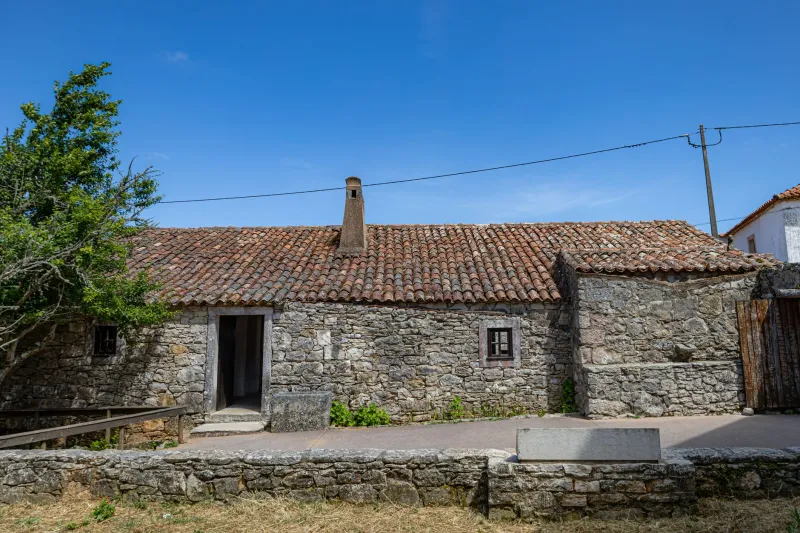
The house had no roof when Caroline Whitmore first saw it. The walls were standing — just — and a fig tree had colonised what had once been the kitchen, its roots pushing through the stone floor with the patient authority of something that had decided the building was now its own. It was located in the Alentejo region of Portugal, two hours from Lisbon, and it had been empty for thirty years.
Caroline, a 52-year-old former NHS consultant from Shropshire, bought it anyway.
"Everyone thought I'd lost my mind," she says, with the particular calm of someone who has long since stopped caring. "And perhaps I had. But I also knew, standing in that roofless room with the fig tree growing through the floor, that I wanted to be the person who fixed this. Not a contractor. Me."
The Pull of the Particular
Caroline is not alone. Across southern Europe — in the sun-bleached villages of the Alentejo and the Algarve interior, in the forgotten towns of Calabria and Basilicata, in the olive-grove valleys of the Peloponnese — British women are quietly acquiring ruins and undertaking their restoration. They are doing so with varying degrees of practical experience, varying quantities of savings, and a shared quality that is difficult to name precisely but recognisable immediately: a desire for something real.
This is not the lifestyle fantasy of glossy interiors magazines, though the results are often beautiful. It is something more complicated and more interesting — a form of travel that refuses to remain superficial, a commitment to a place that demands reciprocity. You cannot restore a ruin without the ruin restoring something in you.
Julia Adeyemi, 44, a freelance graphic designer from Brighton, purchased a derelict farmhouse in the Greek Peloponnese four years ago. She spends four months of the year there, working remotely, overseeing the ongoing restoration, and learning, slowly, to become someone who belongs somewhere she was not born.
"The first year, I was a tourist who owned a house," she says. "The second year, I was a foreigner with a project. By the third year, the village had started to include me in things. Someone brought me figs from their tree. Someone else showed me how to make the plaster the right way, the old way. That's when I understood what I was actually doing there."
The Post-Brexit Complexity
The practical landscape has shifted considerably since the United Kingdom's departure from the European Union, and it would be dishonest to discuss this movement without acknowledging the additional layers of complexity that Brexit has introduced.
British nationals purchasing property in EU member states now face restrictions on continuous residency — the ninety-day rule within any one hundred and eighty-day period applies across the Schengen Area — which has altered the nature of what is possible. For many of the women in this story, the model is not emigration but oscillation: a life lived between two places, two rhythms, two versions of themselves.
Property purchase itself remains legally straightforward in Portugal, Italy, and Greece, though the specifics vary by country. Portugal's Golden Visa programme, while significantly revised in recent years, still offers residency pathways for qualifying investments. Italy's much-publicised one-euro house schemes have attracted attention, though experienced buyers caution that the associated renovation obligations and municipal conditions require careful legal scrutiny before commitment.
Navigating foreign property law post-Brexit demands proper legal representation in the country of purchase — a bilingual solicitor, not merely an estate agent with ambitions. It demands patience with bureaucracy that operates at a pace entirely its own. And it demands a realistic assessment of renovation costs, which have a near-universal tendency to exceed initial estimates by a margin that would alarm a less determined person.
Caroline Whitmore smiles when asked about her original budget. "Double it," she says simply. "Whatever number you have in your head, double it, and then add time."
Restoration as Practice
What distinguishes the women undertaking these projects from conventional property investors is the nature of their engagement with the work itself. These are not absentee landlords commissioning renovations from afar. They are present, frequently hands-on, and almost universally changed by the process.
Fiona MacAllister, 49, a former secondary school headteacher from Glasgow, has been restoring a masseria — a traditional fortified farmhouse — in Puglia for three years. She has learned to lay lime plaster, to read the structural logic of dry-stone walling, to communicate with local craftsmen in Italian that has improved dramatically under the pressure of necessity.
"Restoration teaches you to look properly," she says. "You have to understand what a building is before you can understand what it needs. That kind of attention — sustained, patient, humble — it changes the way you see everything else. I came here thinking I was saving a building. The building is saving me."
This language — of mutual repair, of reciprocal transformation — recurs across conversations with women engaged in these projects. There is something in the act of restoration that speaks to a particular moment in a woman's life: a desire to work with one's hands after years of working with one's mind, to create something tangible, to slow down without stopping.
Belonging as a Practice, Not a Birthright
The question of belonging is perhaps the most nuanced thread running through all of these stories. These women are not naive about their position — they are outsiders, economically privileged by the very exchange rates and property markets that make these purchases possible, and they are aware of that dynamic.
What they are building, most of them would argue, is not ownership of a place but relationship with one. They learn the language, however imperfectly. They buy from local suppliers, employ local tradespeople, eat in the village café rather than driving to the nearest town. They participate, as fully as they are permitted and welcomed to, in the life around them.
"I will never be from here," says Julia Adeyemi, looking out across the olive trees that surround her Peloponnesian farmhouse. "But I can be of here, in some small way. I can be someone who cared enough to stay."
The fig tree in Caroline Whitmore's Alentejo kitchen has been carefully removed. The floor has been re-laid in traditional terracotta. The roof is on. The walls, repointed and whitewashed, glow in the late afternoon light.
She plans to spend six months of the year there, indefinitely. She has no intention of selling.
"This house waited thirty years for someone to come back to it," she says. "I intend to be worth the wait."