Stranger in a Familiar Land: The Quiet Dislocation of Coming Home After a Journey That Changed You
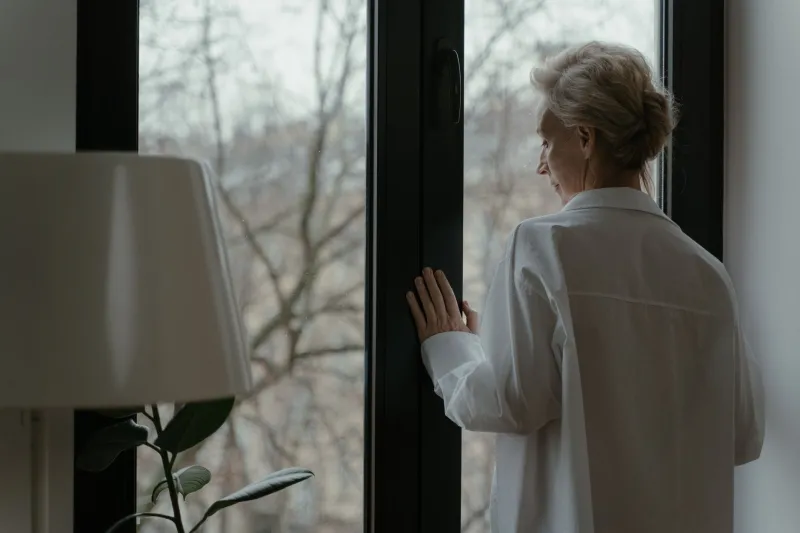
The anthropologists have a term for it — 'reverse culture shock' — though the clinical precision of that phrase does rather little justice to the experience itself. It does not capture the specific strangeness of standing in your own kitchen on a grey Tuesday morning, mug in hand, looking out at the street you have looked out at for years, and feeling — not unhappy, exactly, but somehow displaced. As though someone has moved all the furniture one inch to the left. Everything is familiar. Nothing quite fits.
If you have returned from a journey that genuinely altered something in you, you will likely recognise this feeling. And if you have not yet encountered it, it may be worth knowing that it is coming — not as a warning, but as a reassurance. Dislocation of this kind is not dysfunction. It is, in fact, the proof that the journey did its work.
The Paradox of Return
We speak of travel as something that happens elsewhere. The journey begins when we leave and ends when we return. Home is the fixed point from which we depart and to which we come back, unchanged in its reliability even as we ourselves are altered by what we have encountered.
But this framing contains a quiet untruth. Home does not wait for you in the way you imagine. It continues, in your absence, to be exactly what it has always been — and it is precisely this continuity that becomes so disorienting upon return. The city, the street, the people who love you: they have not moved. You have. And the distance between where you were and where you find yourself standing is not geographical. It is internal, and it is real.
Many women describe this experience as one of the least discussed aspects of serious travel. We talk extensively about the transformation — the moment of clarity on the mountain, the unexpected friendship, the afternoon in the foreign city when everything seemed, briefly, to make sense. We talk rather less about what happens when you bring that altered self back to an environment that has no particular interest in accommodating your transformation.
What No One Warns You About
Clare, a landscape architect from Edinburgh, returned from four months travelling independently through Central Asia to find that the experience she had been longing to share felt, in conversation, almost impossible to convey. 'People were kind,' she says. 'They asked questions, they were interested. But I could feel the gap between what I was trying to say and what was landing. I started giving shorter answers. Eventually I stopped talking about it much at all.'
This compression of experience into socially manageable units is something many returning travellers describe. The journey, in its fullness, resists easy translation into dinner-party anecdote. And the failure to convey it — the sense of watching something precious become smaller and more ordinary in the retelling — can produce its own particular grief.
There is also the matter of pace. Travel, particularly the slow and intentional kind, recalibrates your relationship with time. You have spent weeks operating at a rhythm dictated by light and appetite and curiosity rather than by the demands of a schedule. Returning to the structure of British working life — the commute, the inbox, the relentless productive efficiency expected of a functioning adult — can feel, in the first weeks, genuinely bewildering. Not because the life is bad. But because you have briefly inhabited a different tempo, and the body remembers.
The Country That Looks Like Yours
There is something additionally strange about returning to Britain in particular. We are a country that is — and I say this with considerable affection — not always especially interested in the inner lives of people who have just come back from somewhere. There is a cultural tendency, well documented and occasionally charming, to receive accounts of transformative experience with a gentle scepticism. 'Lovely, was it? Marvellous. Now, did you see the match?'
This is not unkindness. It is, in its way, a form of democratic levelling — the British instinct to resist the grandiose, to distrust the epiphanic. But for the woman who has just spent six weeks walking alone through unfamiliar terrain and thinking, with unusual clarity, about who she is and what she wants — this deflection can feel, in the moment, profoundly isolating.
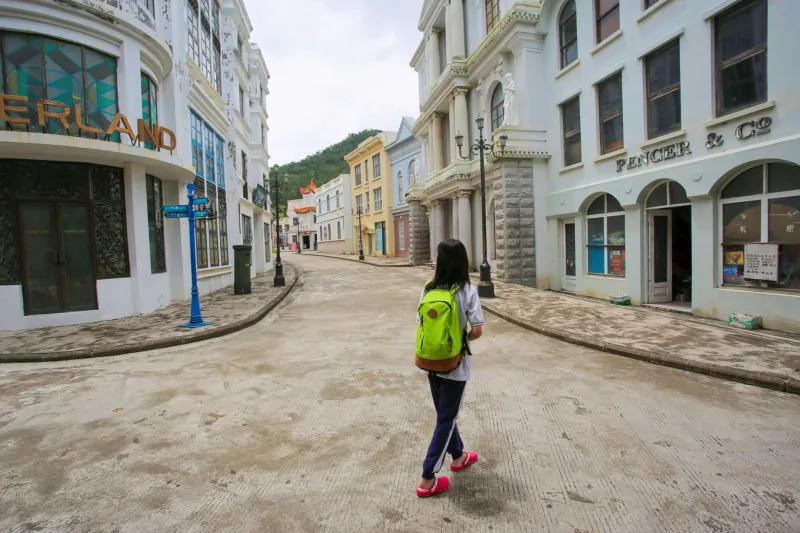
The city you return to has not changed its skyline. Your friends are still your friends. The pub is still the pub. And yet you find yourself looking at all of it with the slightly detached attention you have spent weeks training on foreign streets — noticing details you previously overlooked, questioning habits you previously accepted, feeling, in the most fundamental sense, like a visitor in your own life.
Integration Rather Than Resolution
The instinct, when faced with this dislocation, is to seek resolution — to find a way to make the feeling stop, to return to comfortable familiarity, to put the journey behind you and get on with things. This is understandable. It is also, I would suggest, a mistake.
The discomfort of return is not a problem to be solved. It is information. It is the gap between who you were before and who you are becoming, and it deserves to be inhabited rather than closed prematurely. The question is not how to feel at home again as quickly as possible, but what the experience of feeling foreign in your own life is trying to tell you.
Practically, this means resisting the urge to immediately re-submerge in the routines and demands of settled life. Give yourself, if you possibly can, a period of deliberate transition — a few days, or even a week, in which you do not expect yourself to be fully re-assimilated. Keep a journal. Cook the food you ate while you were away. Seek out the company of people who have travelled seriously and will not require you to reduce your experience to a postcard summary.
It also means beginning to ask, with genuine curiosity rather than anxiety, what you want to bring back with you. The journey has offered you a perspective — a particular way of seeing, a set of values or priorities that felt more alive abroad than they do at home. The work of return is not to abandon that perspective but to find ways of sustaining it within the texture of ordinary life.
The Permanent Traveller
There is a version of this that goes deeper still. Some women who travel seriously and repeatedly begin to notice that the dislocation of return never entirely resolves — that they carry, permanently, a kind of dual citizenship between the settled and the wandering self. This is not restlessness, or not only restlessness. It is the cultivation of what I can only describe as a traveller's consciousness: a habit of attention, an openness to the unfamiliar, a refusal to stop noticing the world simply because it has become familiar.
This, perhaps, is what travel is ultimately for. Not the accumulation of places visited or experiences collected, but the gradual development of a self that remains curious, permeable, and alert — even when standing in its own kitchen, on a grey Tuesday morning, looking out at the street it has always known.
The journey does not end when you come home. In some essential sense, it is only just beginning.
Welcome back. And welcome, too, to whatever it is you have become.