One Foot in Front of the Other: What British Women Are Discovering When They Walk the Camino Alone
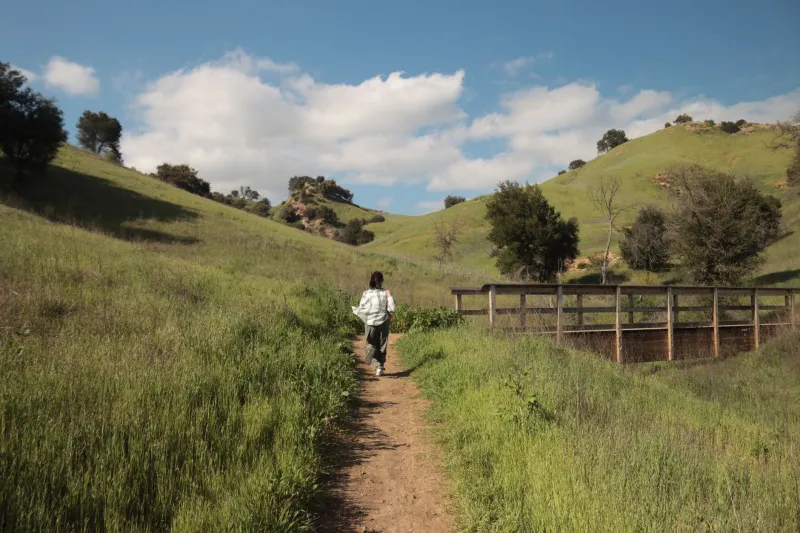
Sarah left her job in Bristol on a Tuesday in April. By the following Sunday, she was standing at the foot of the Pyrenees in Saint-Jean-Pied-de-Port, wearing a rucksack she had been assured was too heavy, holding a scallop shell she wasn't entirely sure she believed in. She was 47 years old, recently divorced, and — by her own admission — terrified.
"I kept asking myself what on earth I was doing," she says. "I didn't speak French. I didn't speak Spanish. I hadn't walked more than five miles at a stretch in years. And I was entirely, absolutely alone."
Thirty-three days later, she wept in the square outside the Cathedral of Santiago de Compostela. Not, she is careful to clarify, because she had found God. But because she had, somewhere between the blisters and the dawn starts and the unexpected kindness of strangers, found herself again.
Sarah is not unusual. In fact, she is part of a growing and quietly extraordinary phenomenon: British women, in increasing numbers, choosing to walk the Camino de Santiago solo. Pilgrimage records from the Pilgrim Office in Santiago show that solo female walkers now represent one of the fastest-growing demographics on the route. And while the Camino has long carried spiritual significance — it is, after all, a medieval Christian pilgrimage to the tomb of Saint James — the women setting out today are often motivated by something altogether more personal, and considerably harder to articulate.
The Pull of Something Unnamed
Ask a woman why she decided to walk the Camino alone and you will rarely receive a tidy answer. There is almost always a pause — the kind that suggests the question is being taken seriously.
"I knew I needed to do something that frightened me," says Clare, a secondary school teacher from Edinburgh who walked the Camino Francés last summer at the age of 52. "I'd spent twenty years being needed by everyone else. I wanted to find out what I was like when nobody needed me at all."
This sentiment — of walking toward a version of oneself that ordinary life rarely permits — surfaces again and again in conversations with women who have completed the route. The Camino, in this reading, is less a religious exercise than a sustained act of self-reckoning. It asks something very specific of its walkers: that they show up, day after day, in the same body, with the same thoughts, and keep moving through them.
There is no shortcut on the Camino. There is no fast-forward. The discomfort — physical, emotional, existential — must simply be walked through, at a pace of roughly four kilometres per hour.
The Body Keeps the Score, and Then the Score Changes
The physical reality of the Camino is not glamorous, and any honest account of it must acknowledge this. Blisters are almost universal. Tendinitis is common. The first week, most walkers will tell you, is a form of controlled suffering — muscles screaming in protest, feet staging what amounts to a full rebellion.
And yet, something strange happens around day ten or eleven. The body adapts. The rhythm becomes automatic. And without the constant distraction of managing physical pain, the mind begins to quieten in ways that feel, to many women, genuinely unfamiliar.
"I hadn't had a thought that wasn't about logistics or other people in years," says Priya, a 39-year-old solicitor from London who walked the Camino Portugués last autumn. "By the second week, I was having thoughts I didn't even recognise as mine. Old memories. Strange realisations. Things I'd been avoiding for years just... surfaced. There was nowhere to put them except into the walking."
This is, therapists and psychologists might note, not entirely surprising. Bilateral movement — the rhythmic, alternating left-right pattern of walking — has long been associated with emotional processing. The Camino, with its enforced simplicity and its long, uninterrupted days, creates conditions that are, in some respects, therapeutically ideal.
Alone, But Never Lonely
One of the most persistent misconceptions about walking the Camino solo is that it is a solitary experience. In practice, the route is threaded with a particular kind of temporary community — what regular walkers call the Camino family — that forms and reforms along the way.
Albergues, the pilgrim hostels that line the route, are social spaces by necessity. Dinners are shared. Blisters are compared with the weary solidarity of people who have suffered the same indignity. Languages blur together. Nationalities become, if not irrelevant, then considerably less important than they are at home.
"I walked into an albergue in Burgos on my ninth day," recalls Clare, "and ended up spending three hours talking to a retired nurse from New Zealand and a young woman from South Korea who had almost no English. We understood each other perfectly. I don't know how."
For many solo women walkers, these fleeting, intense connections become one of the Camino's most unexpected gifts. Freed from the social architecture of their ordinary lives — from the roles of colleague, mother, partner, daughter — they meet people without context or history, and find, in that anonymity, a kind of freedom.
What the Path Actually Asks of You
To walk the Camino alone as a woman is, it should be said, also to navigate a set of practical realities that deserve honest acknowledgement rather than romanticisation.
Safety, while generally excellent on the well-trafficked Francés route, requires common sense: walking in daylight, staying in reputable albergues, sharing your itinerary with someone at home. Harassment, while not endemic, is not unknown, and women travelling solo should trust their instincts without apology.
The logistics of preparation matter too. Footwear broken in over months, not days. A pack weight that experienced walkers almost universally advise keeping below ten percent of your body weight. A basic grasp of Spanish that goes beyond hola and gracias — though even this, as it turns out, can be negotiated with goodwill and a willingness to look slightly foolish.
Priya, the solicitor, laughs at the memory of her early attempts to communicate. "I was ordering coffee for three weeks before I realised I'd been asking for it with sugar every time. I don't take sugar. But the woman behind the bar smiled at me every morning like I was doing brilliantly, and honestly, that was enough."
The Other Side of Fear
What do women find, when they reach Santiago? The answers are as varied as the women themselves. Some find clarity about decisions they have been postponing. Some find, simply, that they are more capable than they had believed. Some find grief they had not known they were carrying. Some find, rather quietly, that the question they set out to answer has dissolved, and that the dissolving is itself the answer.
Sarah, who began this story standing terrified at the foot of the Pyrenees, now walks the Camino Portugués every other year. She has become, in the intervening time, something of an informal adviser to other women in her orbit who feel the pull of the path.
"I tell them the same thing every time," she says. "You will be uncomfortable. You will be tired. There will be a day — probably around day four — when you will be absolutely convinced you have made a terrible mistake. Walk through it. Just keep walking."
The Camino, in the end, does not promise transformation. It simply creates the conditions in which transformation becomes possible — one slow, honest, blistered step at a time. For women who have spent years moving at the pace of other people's needs, there is something quietly radical in that.
The path is there. The question is whether you are ready to walk it.
The Camino Francés begins in Saint-Jean-Pied-de-Port, France, and covers approximately 800km to Santiago de Compostela. The Camino Portugués begins in Lisbon or Porto and is considered a gentler introduction to pilgrimage walking. The Pilgrim Office in Santiago issues the Compostela certificate to those who walk at least the final 100km. A valid pilgrim passport (credencial) can be obtained in the UK through the Confraternity of Saint James (csj.org.uk).