Two Wheels, One Road, No Rush: The Transformative Logic of Cycling Inland Brittany
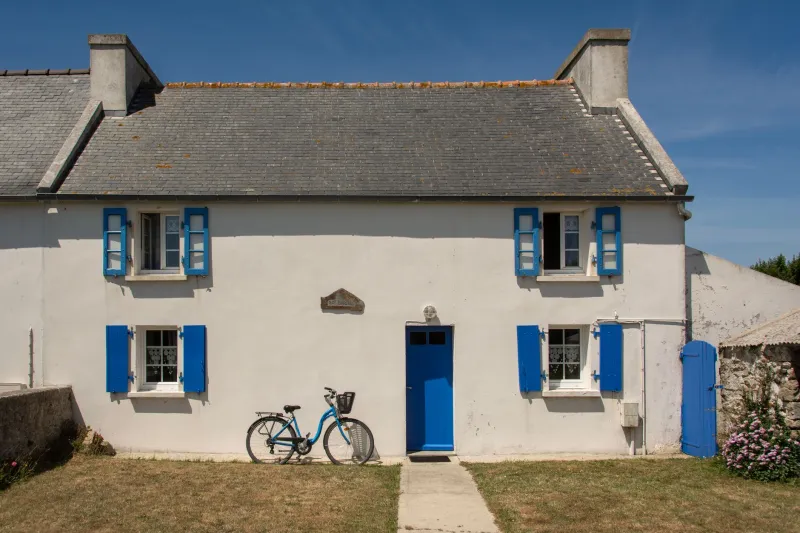
There is a particular quality of light in inland Brittany that you will never see from a car window. It arrives sideways, through hedgerows older than most English counties, and it falls across sunken lanes — the chemins creux — in a way that makes the whole world feel like a secret being shared exclusively with you. To experience it, you must be moving at roughly fifteen kilometres per hour. You must be slightly out of breath. And you must have chosen, deliberately and without apology, to be somewhere that most travellers are simply passing through on their way to somewhere else.
Cycling the back roads of Brittany is not, it should be said immediately, a pursuit reserved for the lycra-clad or the relentlessly athletic. The inland routes — particularly those threading through the Monts d'Arrée, the Nantes-Brest Canal towpath, and the ancient voies that once carried pilgrims south towards Santiago — are, by and large, gloriously forgiving. The terrain undulates rather than punishes. The distances between villages are manageable. And the infrastructure, if one is prepared to abandon the rigidity of a fixed itinerary, is entirely accommodating.
What cycling these roads demands is not fitness. It is willingness.
The Philosophy of the Slower Pace
There is a paradox at the heart of slow travel that reveals itself most clearly on a bicycle: by choosing the slower mode, you arrive somewhere more completely. Not merely geographically, but psychologically. A woman who has cycled forty kilometres through the Finistère countryside — who has felt the gradient in her thighs, smelled the gorse burning on the hillside, stopped twice because something caught her eye — has earned her destination in a way that no passenger ever quite can.
This is not romanticism for its own sake. It is a genuine recalibration of the relationship between effort and reward, between body and landscape. The motorway delivers you to a place. The bicycle introduces you to it.
Brittany, perhaps more than any other region of France, rewards this introduction. Its interior has been quietly resisting the homogenising force of mass tourism for decades. The villages of the Montagnes Noires do not have boutique hotels photographed beautifully for Instagram. They have boulangeries that open at seven and close at noon, war memorials bearing the same surnames as the men behind the bar, and an atmosphere of profound, unhurried continuity that feels — particularly for those of us arriving from Britain's relentless pace — like a form of medicine.
Routes Worth Riding
For the uninitiated, the Nantes-Brest Canal towpath is the most logical entry point. Running for over three hundred and sixty kilometres through the Breton heartland, it is largely flat, traffic-free, and lined with a rhythm of locks, lock-keeper's cottages, and small harbour towns that makes navigation almost incidental. You simply follow the water.
The stretch between Pontivy and Rostrenen is particularly recommended for those who wish to understand Brittany's cultural depth without covering excessive ground. Here, the canal passes through a landscape that feels genuinely medieval in its quietude — herons standing in the shallows with the patience of monks, farmhouses set back behind stone walls, the occasional bar-tabac where the coffee arrives in a small cup and the proprietor asks, with real curiosity, where you have come from.
For those seeking something with greater topographical character, the routes through the Monts d'Arrée — Brittany's ancient, windswept spine — offer an entirely different register. This is wilder country, darker in palette, with a Celtic atmosphere that feels closer to Pembrokeshire than to Provence. The climbs are real but never savage, and the reward at the summit of the Roc'h Trévezel — a panorama of moorland and reservoir stretching to the Atlantic horizon — is the kind of view that justifies every slow kilometre.
Pilgrim routes, particularly the Tro Breizh — the ancient circuit of Brittany's seven founding saints — offer a third possibility for those drawn to travel with historical resonance. These paths connect granite cathedral towns through countryside that has been walked, and now cycled, for over a thousand years. There is something quietly extraordinary about moving through a landscape shaped by devotion, even for the entirely secular traveller.
The Women Who Feed You Along the Way
No account of cycling Brittany's interior would be complete without proper acknowledgement of the crêperies. Not the tourist-facing establishments of Quimper or Vannes, but the small, family-run crêperies de campagne found in market towns — often presided over by women of a certain age and absolute authority, for whom the galette is not a meal but an institution.
At a table in a village outside Gourin on a Tuesday market morning, I was served a buckwheat galette filled with andouille sausage, egg, and a frankly immodest quantity of salted butter by a woman who had been making them since before I was born. She spoke no English. I spoke inadequate French. We communicated entirely through the universal language of a clean plate and a request for another.
These encounters — unhurried, untranslatable, entirely dependent on having arrived somewhere slowly enough to stop — are the true currency of this kind of travel. They cannot be booked. They cannot be replicated on a coach tour. They exist only at the intersection of a quiet road, a bicycle, and the willingness to let the day arrange itself.
Practical Notes for the Practical Woman
Bicycle hire is available in most Breton market towns, and many gîtes in the interior now offer bikes as standard. Electric-assist options — the vélo électrique — are increasingly widespread and carry no shame whatsoever; they simply extend the range of what is accessible without altering the fundamental quality of the experience.
Accommodation along the main cycling routes tends towards chambres d'hôtes and gîtes rather than hotels, which suits the rhythm of this kind of travel rather well. Booking one or two nights ahead is generally sufficient; rigid pre-planning works against the spirit of the enterprise.
The cycling season runs comfortably from late April through September. May and early June are, by many measures, the finest months — the hedgerows are in flower, the roads are quiet, and the light has not yet acquired July's bleached quality.
Pack light. Carry a good waterproof, because this is Brittany and the Atlantic is never far away. Bring a small notebook, because you will want to record things. And leave, if you can manage it, the expectation of covering a fixed distance each day.
To Arrive Having Earned the View
The borrowed bicycle — hired for a week from a man in Carhaix who gave me a puncture repair kit and a hand-drawn map of his favourite boulangeries — taught me something that no amount of reading about slow travel had quite managed to convey. The point is not the destination. The point is not even, precisely, the journey. The point is the particular quality of attention that a bicycle enforces.
You cannot be distracted on a bicycle in the way you can in a car or on a train. The road requires your eyes. The gradient requires your body. The village square, when you finally roll into it and lean your machine against the nearest wall, requires your presence in a way that feels — after weeks of the opposite — like a genuine luxury.
Brittany, in its quiet, granite-stubborn, unhurried way, is waiting to be discovered at exactly this pace. Not faster. Never faster. Just the speed at which a woman on two wheels begins, slowly, to see everything.