How to Read a City: The Hidden Language Written in Stone, Steel, and Street Plans
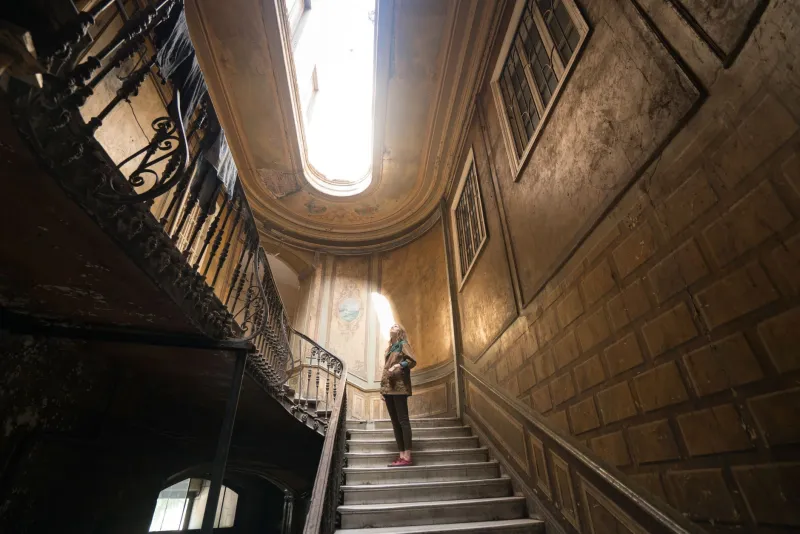
Before you open a guidebook, before you consult a map, before you ask anyone for a recommendation — look up. Then look down. Then look at the building across the street and ask yourself who built it, for whom, and what they were trying to say.
Every city is a palimpsest: a document written, erased, and rewritten across centuries, its layers visible to anyone who knows how to look. The street that bends inexplicably in a city of grid plans is following the line of a medieval field. The grand boulevard that cuts a straight line through an older neighbourhood speaks of empire, of displacement, of a particular vision of order imposed upon more organic lives. The square that feels too large for its current use once held a market, or a gallows, or both.
For women who travel with genuine curiosity, learning to read the built environment is one of the most rewarding skills available. It requires no special training — only attention, a willingness to ask questions, and the patience to resist the gravitational pull of the obvious.
The Building as Biography
Architecture does not lie in the way that tourist brochures sometimes do. It cannot be edited for palatability. A city's buildings tell you, with considerable candour, who had power at any given moment in history, what they valued, and who they chose to accommodate — or exclude.
Dr Amara Kone, a Ghanaian-British urban historian based at University College London, has spent fifteen years studying how cities encode social hierarchies in their physical structures. "When I travel," she says, "the first thing I do is look at where the grand public buildings are placed in relation to the residential areas. Who had easy access to civic life, and who had to travel to reach it? That spatial arrangement tells you a great deal about how a society understood itself."
This kind of reading is available to any traveller willing to slow down and look. In Edinburgh, the Nor' Loch was drained and replaced by Princes Street Gardens in the eighteenth century — a transformation that separated the Old Town's densely populated medieval tenements from the elegant New Town being constructed for the city's wealthier citizens. The geography itself became a class boundary. You can stand on the bridge between the two and feel that history in your body.
In Vienna, the Ringstrasse — the grand ceremonial boulevard completed in the 1860s — was constructed to project imperial confidence at precisely the moment that confidence was becoming fragile. The scale is the message. Magnificence, when deployed this deliberately, is almost always a form of anxiety.
What Women's Eyes Find
Female architects, urban planners, and scholars have increasingly documented the ways in which the built environment has historically been designed with male experience as the default. The implications for women who travel are not merely academic.
Jane Hayward, a London-based urban planner who has worked on public space design across Europe, points to the seemingly mundane: bench placement, lighting levels, the width of pavements, the location of public conveniences. "These are not neutral decisions," she says. "They reflect assumptions about who public space is for, who is expected to linger, and who is expected to move through quickly. When you start noticing which spaces feel welcoming to women and which feel hostile, you're reading a city's politics in the most direct way possible."
This is not a counsel of anxiety — quite the opposite. Understanding why a space feels a particular way is empowering. It transforms a vague discomfort into a legible argument. And it allows the curious traveller to seek out the spaces that have been designed with different assumptions: the neighbourhood squares in Bologna where multiple generations gather at all hours, the covered passages of Paris that were built for pedestrian pleasure rather than vehicular efficiency, the small parks in Vienna that were created specifically as places of rest and sociability.
A Practical Grammar for the Attentive Traveller
You do not need an architectural education to begin reading a city more carefully. A few orienting questions, asked consistently, will open up a new dimension of any destination.
Who is commemorated, and who is absent? Statues, street names, and plaques reveal whose history has been deemed worthy of public memory. Walking through a city and noting the demographics of those memorialised tells you something precise about how power has been distributed — and how it is currently being contested. Many cities are now actively revising their commemorative landscape; watching that process unfold in real time is one of the more instructive things a traveller can witness.
What has been preserved, and what has been demolished? The buildings a city chooses to protect reveal its values. Those it allows to be destroyed reveal its priorities. The gap between the two is often where the most interesting stories live.
Where do the edges meet? The boundaries between neighbourhoods — where a wealthy district gives way to a less affluent one, where the old city meets the new — are often the most revealing places in any urban environment. Walk the borders rather than the centres.
Look at the small things. Doorways, window proportions, the materials used in a building's facing. These details speak of local craft traditions, of available resources, of the period in which a building was constructed. A city's vernacular architecture — the everyday buildings rather than the monuments — tells you more about how ordinary people actually lived than any museum.
The City as Companion
Travellers who develop this practice describe a qualitative shift in how they experience unfamiliar places. The city ceases to be a backdrop and becomes a companion — something with its own history, its own contradictions, its own ongoing story in which your visit is a small but real chapter.
There is a particular pleasure in arriving in a city you have never visited and finding that you can already read something of its character before you have spoken to a single inhabitant. The street plan tells you about its medieval or Baroque origins. The materials tell you about its geology and its trade routes. The public spaces tell you about its social ambitions. The gaps and the ruins tell you about its losses.
None of this replaces the human encounter, the taste of the local cuisine, the sound of the language. But it enriches all of those things, placing them within a physical and historical context that gives them greater meaning.
A city is always speaking. The question is simply whether you are listening.