No Reservation Required: The Liberating Art of Choosing Your Destination at the Departure Board
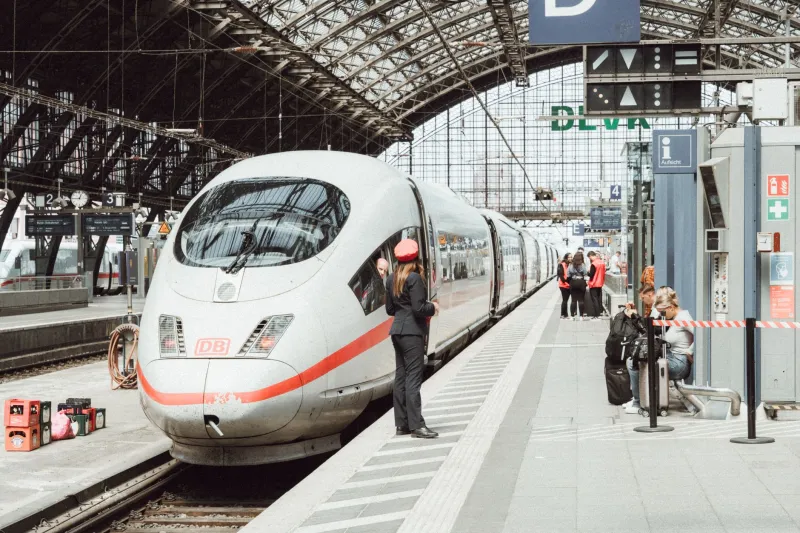
The departure board at Brussels-Midi flickers in that particular way of European stations — a mechanical shimmer, destinations rolling upward like a slow hand of cards being dealt. Amsterdam. Cologne. Paris Nord. Luxembourg. Lille. I had arrived with a rail pass, a small leather holdall, and a rule I had imposed upon myself with something between excitement and mild terror: I was not permitted to have chosen my destination before I walked through the door.
The train to Luxembourg departed in eleven minutes. I had never been to Luxembourg. I went.
The Tyranny of the Optimised Journey
Most of us approach travel as a problem to be solved. We research, compare, cross-reference, and curate until the journey exists almost entirely in the mind before it has happened in the body. There is pleasure in this, certainly — the anticipatory scroll through photographs, the satisfying click of a confirmed booking, the itinerary printed or saved and consulted like a small scripture. But there is also a cost, and it is one that takes several impulsive train journeys to fully appreciate.
The optimised journey carries its own anxiety with it. When every hour has been assigned a purpose, deviation becomes failure. A delayed connection is not an adventure; it is a problem. An unexpected recommendation from a stranger on the platform is a temptation to be resisted rather than a gift to be accepted. We have, in our very reasonable desire to make the most of our time and money, quietly eliminated the possibility of being surprised.
Spontaneous rail travel — choosing the destination at the station, on the day, from whatever is departing within the hour — is not the absence of planning. It is a different kind of discipline entirely.
What the Departure Board Actually Asks of You
Standing before a large European departure board with genuine openness requires something that is harder than it sounds: the willingness to be a beginner. Not a beginner at travel, necessarily, but a beginner at this particular place, this particular moment. You do not know what awaits you in Strasbourg. You have no framework for what the afternoon in Bruges might hold. You are, in the most productive sense, ignorant.
For women who have spent considerable energy becoming competent — in careers, in relationships, in the management of complex lives — this can feel profoundly unsettling. Competence, we have learned, is protection. To not know is to be vulnerable. And yet it is precisely this vulnerability that makes spontaneous travel so disarmingly effective as a form of self-knowledge.
In Luxembourg, I checked into a small hotel near the Grund, ate dinner alone at a restaurant I chose by walking until I was hungry, and spent the following morning in the Musée National d'Histoire et d'Art entirely by accident. I had not known I was interested in medieval Flemish altarpieces. It turns out I am.
The Practicalities, Because They Matter
It would be dishonest to present this mode of travel as without friction, and Voyageuse has never been in the business of selling fantasies that leave you stranded without a hotel room on a public holiday.
A Eurail or Interrail pass is, for most spontaneous rail travellers, the essential foundation. These passes allow travel across multiple European countries without booking individual tickets in advance, and whilst some high-speed services do require a seat reservation (the Thalys, certain TGV routes, most Eurostar services), the majority of regional and intercity trains across France, Germany, the Benelux countries, Austria, and Switzerland do not. Knowing which services require reservations before you reach the board is the one piece of research that will serve you well.
A few further considerations worth holding:
Keep accommodation flexible. Booking.com and similar platforms allow same-day reservations in most European cities, and travelling outside peak summer weeks makes this considerably more reliable. A single night's accommodation booked from your phone on the train is not a compromise — it is part of the rhythm.
Carry more cash than you think you need. Not every small station hotel, every family-run restaurant, every market vendor operates on card alone.
Pack for a week in a bag you can carry without wheels. Spontaneous travel and wheeled luggage are not natural companions. A well-chosen holdall or rucksack — one that fits in an overhead rack and does not require checking — is the physical prerequisite for this kind of freedom.
Give yourself a loose geographic boundary. My own rule was simple: I would not travel more than six hours from Brussels in any direction. This was not timidity but practicality. A boundary is not the opposite of freedom; it is the thing that makes freedom navigable.
What You Learn About Yourself at the Ticket Hall
The most revealing moment of spontaneous rail travel is not the journey itself but the seconds before you commit. Standing at the board, watching the options scroll, you will notice — if you pay attention — what your instincts reach for and what they recoil from. You will notice whether you are drawn to the familiar or the genuinely unknown. You will observe whether you hesitate because you are genuinely undecided or because some part of you is waiting for permission.
On my third day, I nearly chose Paris because it felt safe. I knew Paris. I could navigate Paris without effort or error. I stood there for a long moment, watching the Paris train fill the top of the board, and then I watched myself choose Ghent instead — a city I had visited once, briefly, years ago, and remembered only as beautiful and slightly melancholy in the rain.
It was raining in Ghent. It was wonderful.
This is the psychological gift of the unplanned journey: it reveals the difference between what you want and what you want to want. It shows you where your courage lives and where it doesn't. It returns you, gently and without judgement, to the person you are when no one — including yourself — is watching.
A Different Relationship With Time
There is something else that spontaneous rail travel offers, and it is perhaps the most counter-cultural thing about it: it makes time feel abundant. When you have no fixed arrival, no booked dinner, no scheduled tour, the hours do not contract into a series of obligations. They expand. The journey itself becomes the point, rather than the inconvenient interval between points.
This is not a new observation — philosophers and poets have been making it for centuries — but it is one that must be experienced rather than understood. The train from Ghent to Cologne took three and a half hours through countryside I had no name for. I read. I watched the light change over flat fields. I spoke briefly to a woman travelling to visit her daughter in Aachen, and she told me about a café in that city that served the best Pflaumenkuchen she had ever tasted.
I did not go to Aachen. But I might have. That is the point.
An Invitation, Not a Prescription
Spontaneous rail travel is not for every woman or every season of life. There are moments when what we need from a journey is certainty — the confirmed room, the familiar hotel, the planned itinerary that holds us when we do not have the energy to hold ourselves. This is not failure. This is wisdom.
But if you find yourself at a point where the meticulous planning of travel has begun to feel like an extension of the very pressures you are travelling to escape — if the spreadsheet of bookings brings more anxiety than relief — then perhaps the departure board is worth a second look.
Walk in. See what is leaving. Trust that wherever you go, you will be sufficient to the occasion.
You always have been.