A Spare Room and a Shared Breakfast: What Staying With Strangers Taught Me About the World
There is a moment, standing at the door of a stranger's flat in Tbilisi or Thessaloniki or a small terraced house in Porto, when every reasonable instinct you possess tells you to turn around. You have read the profile. You have exchanged the messages. You have done what due diligence looks like in the digital age. And yet, as you raise your hand to knock, something older and more animal whispers its doubt.
It is precisely in defying that whisper that the most meaningful travel of my life has begun.
For those unfamiliar, couchsurfing — the practice of staying as a guest in a local's home, free of charge, through platforms that connect travellers with willing hosts — has existed in various forms since the early 2000s. What began as a fringe proposition for backpackers on a budget has quietly evolved into something more philosophically interesting: a deliberate rejection of transactional travel, and an invitation to place yourself, however briefly, inside someone else's ordinary life.
The Courage Before the Comfort
Let us be honest about what this requires of a woman travelling alone. The vulnerability is real. You are entering a private space, dependent on the goodwill of someone whose character you have assessed through photographs, reviews left by strangers, and the particular energy of their written sentences. The safety conversation matters — and any responsible account of this kind of travel must acknowledge it. Choosing hosts with verified profiles, extensive positive reviews, and a history of hosting women specifically is not overcaution; it is the baseline from which the adventure begins.
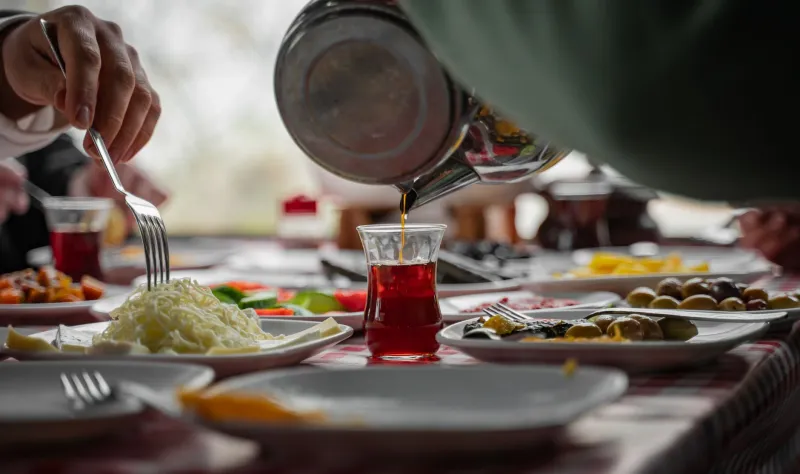
But beyond the practical precautions, there is an emotional preparation that no app can facilitate. You must be willing to be known, at least a little. To eat someone's food, sleep under their roof, and sit with them over coffee at seven in the morning before either of you has fully assembled yourselves for the day — this is intimacy of a kind that a hotel, however charming, cannot manufacture.
Clare, a secondary school teacher from Bristol who has couchsurfed across twelve countries since her late twenties, describes it plainly: "The first time, I nearly cancelled three times before I got on the train. By the second morning, I was helping my host's mother shell beans in her kitchen in Ljubljana and being taught words in Slovenian I've never forgotten. I cried on the train home. Not from sadness — from the shock of how real it had all been."
What Hotels Cannot Sell You
There is nothing inherently wrong with a well-appointed hotel room. The pressed linen, the reliable Wi-Fi, the breakfast buffet arranged with military precision — these are pleasures, and they have their place. But they are also, by design, frictionless. They smooth away the texture of a place. You are a guest of an institution, not a person, and the exchange is clean and contained.
When you stay with a local host, the texture returns immediately. You learn which bus is actually faster than the one the tourist maps recommend. You discover that the neighbourhood café your host favours serves the best börek in the city, despite — or perhaps because of — having no online presence whatsoever. You are handed, without ceremony, the kind of insider knowledge that travel writers spend weeks trying to excavate.
More than that, you are shown how someone actually lives. The books on their shelves, the photographs on their walls, the particular way they take their tea. These details accumulate into something that feels less like tourism and more like understanding.
Rachel, a freelance photographer from Edinburgh, spent three weeks travelling through Georgia and Armenia staying primarily with hosts she'd connected with online. "I came home with images I never would have taken otherwise," she says. "Not because I'd found hidden locations — though I had — but because I was seeing through different eyes. My host in Yerevan took me to her grandmother's village. I photographed a table of women making dolma together. That image has defined my practice since."
The Ethics of Receiving
There is a particular discomfort that many British women describe when first navigating hosted hospitality: the guilt of receiving without an obvious means of reciprocating. We are, as a culture, somewhat allergic to being on the receiving end of generosity. We reach for our wallets; we offer to pay for dinner; we arrive bearing wine and chocolates as though we can pre-emptively settle a debt that hasn't yet been named.
The couchsurfing philosophy — and it does carry something of a philosophy — asks you to release this reflex. The exchange is not financial. It is human. Your host is not providing a service; they are extending an invitation. What you offer in return is your presence, your stories, your willingness to be curious about theirs. The most experienced hosts will tell you that the best guests are not the most grateful, but the most genuinely interested.
This reframing is not trivial. For many women, it represents a quiet revolution in how they understand their own worth as travellers. You are not a burden to be accommodated. You are a person worth knowing.
On Trust, and What Restores It
We live, it is fair to say, in an era that does not make trust easy. The news cycle is relentless in its evidence of human failure. Social media curates our connections into echo chambers of the already-familiar. It is possible to move through a year — through a life — without ever genuinely encountering a stranger.
What strikes me most, speaking to women who have made this kind of travel a practice rather than a novelty, is how consistently they return to the word restored. Not merely surprised by human kindness, but restored to a belief in it. As though something that had quietly calcified in the everyday was broken open again by the simple act of knocking on a door and being welcomed through it.
Amara, a lawyer from London who began couchsurfing after a difficult divorce, is characteristically precise about the effect: "I had become quite defended. Quite armoured. I didn't realise how much until a woman in Marrakech, who I had known for approximately four hours, held my face in her hands and said something to me in Darija that her daughter translated as: you are allowed to rest now. I didn't sleep that night. I just lay there thinking about what it meant to let people see you."
Where to Begin
For those considering this form of travel for the first time, a few practical anchors. Begin with a well-reviewed host in a city you know reasonably well — the familiarity of the surroundings will allow you to focus your attention on the human experience rather than navigating an entirely unfamiliar place simultaneously. Read profiles carefully and at length; the quality of someone's written self-expression tells you a great deal. Look for hosts who specify experience with solo female guests. Trust your instincts at every stage, and know that withdrawing from an arrangement at any point — before or during — is always your prerogative.
And then, when you have done all of that, allow yourself to be genuinely open to what arrives.
The world, it turns out, is considerably kinder than the news would have you believe. You will not discover this by reading about it. You will discover it on a Tuesday morning in a stranger's kitchen, with a cup of coffee you didn't make and a conversation you couldn't have predicted, feeling — with some surprise — entirely at home.