The Long Way Round: On the Lost Art of Coming Home Slowly
There is a particular violence to the modern homecoming. You are sitting at a rooftop table in Lisbon at dusk, wine in hand, the Tagus burning copper below you — and then, fourteen hours later, you are standing in a Sainsbury's in Stockport, wrestling a self-checkout machine that refuses to recognise your bag of spinach. The transition is not a transition at all. It is a rupture.
For most of us, this rupture has become so normalised that we no longer question it. We book the cheapest return flight, set the alarm for an ungodly hour, and submit to the lurching discontinuity of modern travel. We arrive home jetlagged, emotionally unmoored, and vaguely bereft — and then we wonder why it takes weeks to feel like ourselves again.
But a growing number of British women are refusing this bargain. They are, quietly and deliberately, taking the long way home.
What It Means to Choose the Slow Return
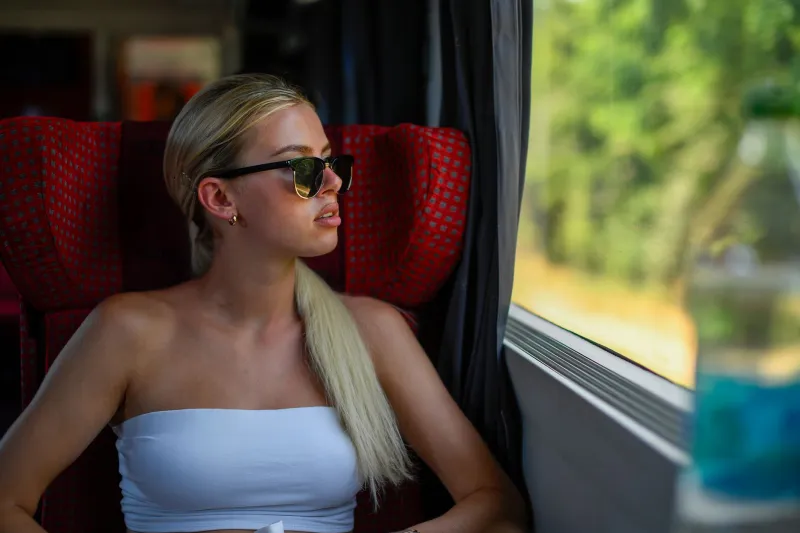
The slow return is not a single practice so much as a philosophy. It might mean travelling overland from southern Spain through France, pausing for two nights in a city you had not planned to visit. It might mean taking a series of regional buses back through the Balkans rather than catching a direct flight from Dubrovnik. It might mean boarding a ferry from Santander to Plymouth, spending thirty-six hours on water before the English coast resolves itself slowly through morning mist.
What these routes share is not inconvenience — though they are, undeniably, less convenient — but intention. The women who choose them are not doing so because they cannot afford to fly. They are doing so because they understand, instinctively or through hard experience, that the abrupt snap back to ordinary life costs something that the budget airline does not put on its balance sheet.
Clara, a secondary school teacher from Bristol who spent three weeks travelling through Georgia last autumn, describes her decision to return overland via Turkey, Greece, and Italy as the best choice she made on the entire trip. "I'd had this enormous experience," she says. "I'd been to places that had genuinely shifted something in me. And the idea of just... compressing all of that into a Ryanair seat and landing at Bristol Airport felt almost disrespectful to what I'd been through. I needed time to let it settle."
She took eleven days to get home. She says she arrived as a different person than she would have been otherwise — not because of what she saw on the way back, but because of the thinking she was able to do.
The Psychology of Gradual Re-entry
There is genuine psychological substance behind what Clara and women like her are describing. The concept of integration — the process by which significant experiences are absorbed and made sense of — is well established in therapeutic contexts, but it is rarely applied to travel, which we tend to treat as leisure rather than as the potentially life-altering event it sometimes is.
When we fly home within hours of a profound journey, we deny ourselves the decompression that integration requires. The mind needs transitional space: time that is neither fully away nor fully home, in which the traveller can begin the quiet work of understanding what has happened to her. The slow return provides exactly this. Each day on the road home is a day in which the distance between the extraordinary and the everyday is incrementally, gently closed.
Psychologists who work with returned travellers — particularly those who have undertaken extended solo trips or immersive cultural experiences — frequently observe what might be called re-entry grief: a flat, directionless melancholy that descends in the days after coming home. It is not depression, precisely, but a kind of emotional hangover. The slow traveller, it seems, experiences this far less acutely. The journey home has already begun the work of grieving the journey itself.
The History We Have Forgotten
It is worth remembering that the slow return is not a modern affectation. It is, in fact, the historical norm.
For the women of previous centuries who travelled — the Victorian adventurers, the Edwardian grand tourists, the mid-century writers and explorers who form so much of the tradition we inherit — the return journey was an integral part of the experience, not an appendage to it. Weeks or months at sea between continents were not wasted time. They were the space in which journals were completed, letters were written, and the self was reassembled after the disorientation of elsewhere.
We have not evolved beyond the need for this space. We have simply stopped building it into our itineraries.
Practical Wisdom from Women Who Have Done It
For those considering their first deliberate slow return, the practicalities are less daunting than they might appear. Europe, in particular, lends itself beautifully to overland homecoming routes. The Interrail network makes a multi-country rail return from almost anywhere on the continent both affordable and genuinely pleasurable. Ferry routes from northern Spain, France, and the Netherlands offer an aquatic alternative that carries its own particular magic — there is something about watching the sea rather than the motorway that encourages a quality of reflection unavailable on land.
Several women interviewed for this piece offered the same piece of advice: build in at least one night in a place you did not plan to visit. The unscheduled stop, the town you chose only because the connection worked, often becomes the most memorable part of the return. It is, in miniature, the entire argument for slow travel: the best things happen in the margins.
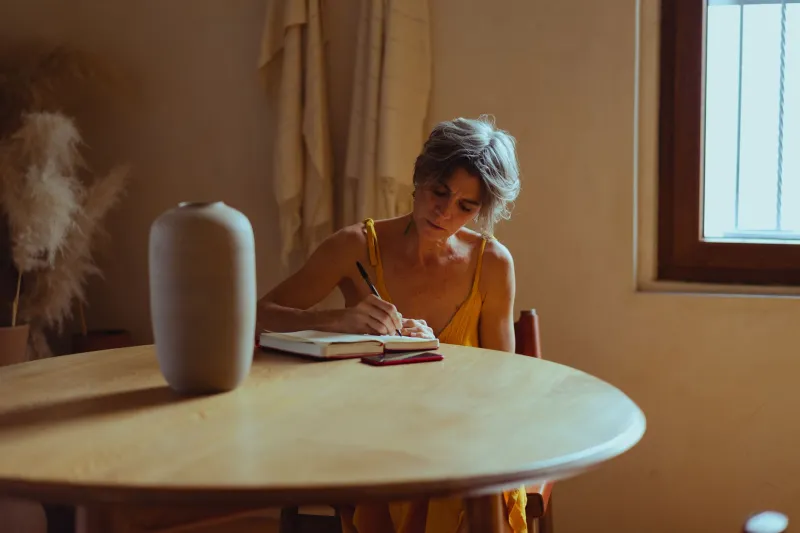
Joanna, a freelance designer from Edinburgh who returned from a month in Morocco by overland bus and train rather than flying, describes stopping unexpectedly in Seville for two nights when a connection fell through. "It was completely unplanned," she says. "I sat in a square and ate churros and wrote in my journal for three hours. I realised that the month I'd just had had changed something quite fundamental in how I wanted to live. I don't think I would have had that clarity if I'd flown straight home. I'd have been too busy putting a wash on."
The Return as Ritual
Perhaps the most useful reframe is this: the journey home is not a logistical problem to be solved as efficiently as possible. It is a ritual — and rituals, as any anthropologist will tell you, exist precisely to mark the transition between one state of being and another.
Every culture that has ever sent its members into the world has also developed practices for their return: ceremonies of welcome, periods of rest and reintegration, customs that acknowledge the traveller has been changed and must be given time to find her new shape. We have abandoned almost all of these. The slow return is, in its modest way, an attempt to recover them.
To choose the long way home is to insist that what happened to you on your travels was real, and significant, and worthy of the time it takes to understand. It is, in the fullest sense of the word, a refusal: of the culture of efficiency, of the tyranny of the direct route, of the fiction that you can leave yourself behind in Lisbon and arrive unchanged in Stockport.
You cannot. You should not try. Take the ferry. Take the night train. Take the road that winds.
The spinach will wait.