The Art of Receiving: Why Saying Yes to Strangers Is the Bravest Thing a Solo Traveller Can Do
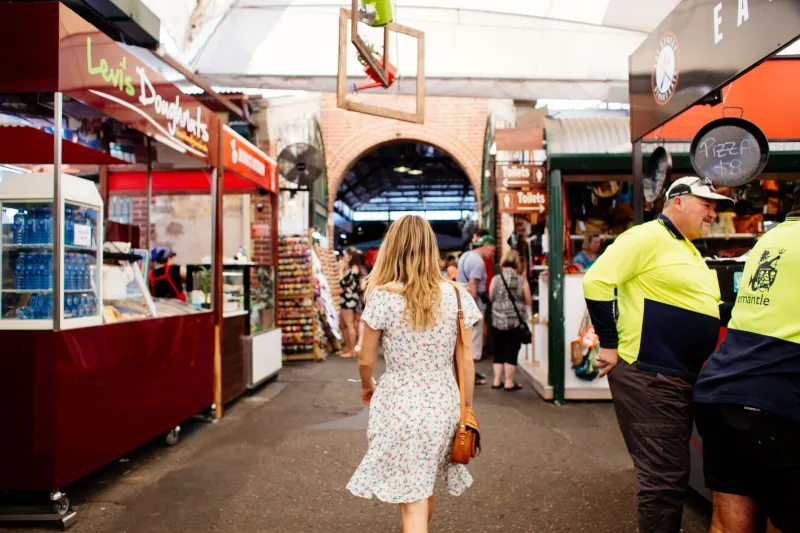
There is a particular kind of woman who plans her journeys with forensic precision. She has the offline maps downloaded, the emergency numbers saved, the phrasebook annotations made in pencil so they can be revised. She has crossed continents alone, navigated cities where she could not read the signage, and managed delayed trains with a composure that would impress a diplomat. She is, in every observable sense, magnificently capable.
And yet, ask her to accept a lift from a stranger who noticed her struggling with directions in the rain, or to sit down at a family table when a grandmother waves her over from across a market square — and watch something shift. A hesitation. A polite deflection. A murmured insistence that she is perfectly fine, thank you, quite all right on her own.
The irony is not lost on those of us who have felt it ourselves: that the women most practised at giving — at holding space, offering directions, sharing what they have — are often the least practised at receiving. And nowhere is this contradiction more visible, or more instructive, than on the road.
The Architecture of Self-Sufficiency
British women, in particular, have been culturally schooled in a certain stoicism. We are taught, from an early age, not to make a fuss, not to impose, not to require too much of others. These lessons serve us well in many contexts. They make us resourceful and resilient. But they can also calcify into something less useful: an inability to be held, even briefly, by the generosity of another person.
Susan, a 54-year-old secondary school teacher from Bristol who has spent three decades travelling alone through South and Central America, describes the moment she recognised this pattern in herself. She was in a small town in the Oaxacan highlands of Mexico when an elderly woman, noticing Susan's confusion over a bus timetable, took her firmly by the arm, walked her to the correct stop, waited with her for forty minutes, and then waved her onto the bus as though seeing off a daughter.
"I spent the whole journey feeling faintly embarrassed," Susan admits. "As if I'd failed somehow. As if needing that help meant I wasn't the traveller I thought I was. It took me years to understand that the embarrassment was the point — that it was telling me something about how I'd defined strength."
What the Road Asks of Us
There is a philosophical tradition — found in various forms across cultures — that regards the capacity to receive gracefully as a form of wisdom equal to, and perhaps rarer than, the capacity to give. In Japanese culture, the concept of omoiyari, or anticipatory empathy, implies a social contract in which both the giver and receiver participate in something meaningful. To refuse a kindness, in many parts of the world, is not modesty — it is a mild rejection of the relationship being offered.
This is something seasoned travellers learn, often the hard way. The market vendor in Marrakech who insists you share her lunch is not pitying you; she is honouring you with inclusion. The family in rural Georgia who will not hear of you paying for the wine is not undermining your independence; they are practising a hospitality so ancient it predates the concept of tourism entirely. To deflect these gestures with a brisk "I'm fine, honestly" is, in the most literal sense, to miss the point of the encounter.
Amara, a 38-year-old graphic designer from Edinburgh who has travelled extensively through West Africa and the Caucasus, puts it plainly: "I used to think accepting help was about safety calculus — is this person trustworthy, what do they want, am I being naive? And yes, discernment matters. But I was using those questions as a shield against something that was actually just intimacy. The discomfort wasn't about danger. It was about being seen."
Vulnerability as Vocabulary
There is a distinction worth drawing here between naivety and openness — one that the most experienced solo women travellers understand instinctively. Accepting help is not the same as abandoning judgement. It is not a suspension of awareness, but rather an expansion of it: a willingness to read a situation generously rather than defensively, to meet an outstretched hand with one's own rather than a polite wave from a safe distance.
The women who travel most richly — not most luxuriously, but most fully — tend to describe a similar turning point. A moment when they stopped managing their vulnerability and started inhabiting it. When they allowed themselves to be the stranger who did not know, the guest who needed guidance, the woman at the table who could not order without assistance and was, for once, entirely at peace with that.
For Caroline, a 67-year-old retired barrister from London who walked sections of the Via Francigena alone in her early sixties, that turning point came in a tiny village outside Siena. She had blistered badly and was limping towards what she hoped was a farmhouse offering rooms. A man she had never met, who spoke no English, simply looked at her feet, disappeared into his house, and returned with a bowl of warm water, a cloth, and what she later identified as calendula ointment. He asked for nothing. He expected nothing. He simply attended to her, matter-of-factly, as one might tend to any creature in evident need.
"I wept," she says. "Not from pain. From being cared for. I hadn't realised how long I'd been holding myself at arm's length from that."
The Radical Act of Saying Yes
In a culture that increasingly frames independence as the highest feminine virtue — that celebrates the woman who needs no one, asks for nothing, and manages everything alone — there is something genuinely countercultural about saying yes to a stranger's kindness. It requires a different kind of courage than the courage of doing hard things alone. It is the courage of being known, however briefly, as someone who is not entirely self-contained.
This is, perhaps, what travel at its most honest is always asking us to practise. Not the performance of capability, but the genuine encounter with our own limits — and the discovery that those limits are not failures, but doorways. That the moment you admit you are lost, or tired, or unsure, is precisely the moment the world tends to lean in.
The woman who travels boldly is not the woman who never needs anything. She is the woman who has learnt to need things gracefully — to accept the offered umbrella, the shared meal, the arm through the confusing station, the glass of something local pressed into her hand by someone who simply wanted to welcome her into their world.
She is the woman who has discovered that receiving is not the opposite of strength. It is, in its own quiet way, the fullest expression of it.